Personal Injury Information, Guides, News, Tools & Resources
State-by-State Bicycle Law Updates
Published by
Personal Injury Insights
on
Key 2025 Developments and Their Legal Implications
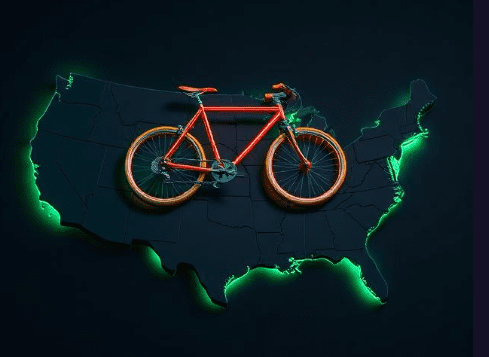
Bicycle laws are shifting fast in 2025, especially around e-bikes, intersection rules, and safety regulations. For personal injury attorneys, advocates, and cyclists, these changes carry meaningful risk‑management, liability, and compensation implications. Below is a deep dive into some of the most important state law updates — what they are, why they matter, and how they may affect injury claims.
1. New Mexico — Idaho Stop Law Goes Live
One of the most significant changes in 2025 is New Mexico’s adoption of the “Idaho Stop” law, via Senate Bill 73, effective July 1, 2025.
What the Law Does
Cyclists can now treat stop signs as yield signs: instead of coming to a full stop, they may slow, check for traffic, and roll through when it’s safe.
For red traffic lights, riders must stop fully first, but may then proceed as if it were a stop sign (when clear).
The law applies to all bicycles, including Class 1–3 e-bikes.
Why It Matters for Injury / Liability
Intersection Risk: Intersections are among the most dangerous places for cyclists. Allowing a roll-through at stop signs may reduce time spent in “conflict zones” (where bikes and cars cross), potentially lowering crash exposure. But it also raises questions: if a cyclist rolls through and is hit, could a negligence or comparative fault argument emerge around whether the rider “should have stopped”?
Proof & Expert Use: In personal injury claims, expert testimony (e.g. from traffic engineers) may be needed to explain what “safe roll-through” means under the new law, especially if fault is contested.
Insurance / Defense Considerations: Defense counsel may argue that a cyclist’s roll-through (even if lawful) contributed to a crash; plaintiffs’ counsel will need to show that the roll-through was consistent with the law’s yield‑style requirement and not reckless.
2. Connecticut — Broad Overhaul of E-Bike Regulation and Helmet Laws
Connecticut enacted a sweeping set of bicycle / e-bike law changes effective October 1, 2025. Key features:
All e-bike riders, regardless of age or class, are now required to wear a helmet.
For traditional bicycles, scooters, and skateboards, the helmet mandate expands: now required for riders 17 and under (previously 15 and under).
Penalties for non-compliance: minimum fines are set (e.g., helmet violations).
E-Bike Classification & Licensing
E-bikes are defined to include “operable foot pedals” and a motor under 750 watts; these remain “bicycles.”
Vehicles with motors between 750 watts and ~3,700 watts are now classified as motor-driven cycles — requiring a valid driver’s license.
E-bikes over 3,500+ watts are legally treated similar to motorcycles, which triggers additional rules (registration, insurance, etc.).
Sales / Modification Rules
Sellers must accurately label their e-bikes. If a bike is mischaracterized in a sale or advertisement, there are financial penalties.
Significant modifications (e.g. removing pedals, increasing power) may change the classification of the vehicle, triggering a requirement to reclassify and relabel.
Implications for Personal Injury / Liability
Helmet Compliance: With a universal helmet mandate for e-bikes, failing to wear a helmet could be a strong point for defense in personal injury lawsuits, especially if head injury is a major component. Conversely, plaintiffs’ counsel should scrutinize whether helmets were worn when injuries occurred.
Classification Risk: High-powered e-bikes being classified as motor-driven cycles (or motorcycles) means more stringent regulation. Riders of these machines may face more liability (and their insurance / registration status could be scrutinized after a crash).
Sales Mislabeling: If a bike was sold as a “normal e-bike” but actually exceeds the legal wattage/class threshold, that misrepresentation could factor into product liability arguments, or be relevant to fault apportionment in a crash claim (e.g., defendant rider or seller misled buyer).
3. California — Battery Safety & Certification (SB 1271)
California is also tightening regulation on e-bike hardware. SB 1271, signed into law, creates new battery certification requirements:
Key Provisions
Starting January 1, 2026, any e-bike sold, leased, or offered in California must have a battery tested by an accredited lab for compliance with safety standards (ANSI/CAN/UL 2849, EN 15194, or a similar standard).
This rule also applies to “powered mobility devices” (i.e., certain throttle-only machines) under ANSI/CAN/UL 2272.
Legal / Injury Implications
Product Liability: If a battery fails (overheats, catches fire, etc.), and it had not undergone proper certified testing, there may be stronger product liability claims. Plaintiffs’ attorneys can point to this certification requirement in establishing that the battery manufacturer breached a safety standard.
Retail / Dealer Responsibility: Dealers must ensure the bikes they sell comply. If they sell non-certified batteries (once the law is active), they could be on the hook legally—and liability may flow through them.
Insurance / Recalls: As e-bikes become more regulated, insurers may tighten underwriting, especially for bikes with high-capacity batteries. Also, this law may spur recalls of non‑compliant models.
Idaho was the original home of the “Idaho Stop,” and while it has had that for decades, its e-bike laws remain a model for other states.
Current Legal Regime (as of recent updates)
Idaho uses a 3-class e-bike system: Class 1 and 2 (assist to 20 mph), Class 3 (pedal-assist to 28 mph), with limits on motor power (≤ 750 W) and required labeling.
No license, registration, or insurance is required for e-bikes that meet the class definitions.
There is no statewide helmet mandate for e-bikes.
The “Idaho Stop” (stop-as-yield at stop signs, red-as-stop) is codified in Idaho law.
Why This Matters in Injury Cases
Comparative Fault: Because Idaho explicitly permits rolling through stops (when safe), defense might argue that a cyclist was acting legally if they rolled and were hit. Plaintiffs’ counsel may need to counter with evidence about whether the “safe” condition existed.
No Helmet Law: The lack of a helmet mandate might complicate claims: defendants might argue that the rider assumed risk by not wearing a helmet, but plaintiffs could highlight that no legal helmet requirement existed.
E-Bike Identification: Since e-bikes must be labeled with class and motor specs, attorneys can rely on labeling (or lack thereof) as evidence in crash investigations — e.g., was the bike misrepresented or modified.
5. Broader Trends & Take‑Home Points
Beyond individual states, several trends in 2025 are especially relevant for legal professionals working on personal injury or liability:
E-Bike Legal Regimes Are Maturing
States are increasingly defining e-bikes in terms of class, power, and behavior.
Higher-powered electric vehicles (small “motorcycles”) are being distinguished from typical e-bikes, with different rules (license, registration, insurance).
This means more complexity in liability: what was once a “bike case” may now look more like a motor‑vehicle case.
Safety Infrastructure Is Driving Law, but Risk Remains
Laws like the Idaho Stop reflect a push to make cycling more fluid and safe — but the law doesn’t eliminate risk.
Courts may wrestle with how “yield-style” intersection behavior aligns with negligence standards.
Product Safety Liability Is Growing
With battery certification requirements (e.g., California), manufacturers may face increased exposure for faulty or non-compliant components.
Attorneys should monitor recall data, lab certifications, and compliance closely.
Compliance Matters in Injury Claims
Helmet mandates, ride classification, and usage rules all change the calculus in injury litigation.
Attorneys should gather evidence on whether riders complied (or didn’t) with the updated laws — and what that means for fault, damages, and responsibility.
Education + Enforcement Are Key
Even the best laws don’t protect if people don’t know them. For injured parties, a lack of public notice could be a relevant factor (e.g., “cyclist didn’t realize rolling through stop sign was lawful under new law”).
On the defense side, showing enforcement or education may help argue that the cyclist should have been aware of the rules.
Recommendations for Personal Injury / Legal Professionals
Stay Local: Bicycle laws vary significantly from state to state. Make sure your jurisdiction’s 2025 changes are on your radar.
Leverage Experts: Use civil engineers, traffic safety experts, and biomechanical experts to explain how new laws (like Idaho Stop) affect risk and accident dynamics.
Investigate the Bike: In accident cases, find out the class, power, and modifications of the bicycle or e-bike. Check labels, purchase records, and whether the bike complies with any new standards.
Document Helmet Use: Ask for helmet history (was the rider wearing one, was it appropriate for the class of bike, was it up to spec).
Watch for Recalls / Certifications: For e-bike cases, check whether the battery was UL-certified (or otherwise compliant), whether any recalls exist, and whether the seller labeled it correctly.
The landscape of bicycle law in 2025 is evolving in ways that matter deeply for injury risk and liability. From New Mexico’s Idaho-Stop rollout to Connecticut’s sweeping e-bike helmet and classification reform, states are rethinking how cyclists—and particularly e-bike riders—fit into the broader traffic system. For personal injury practitioners and safety advocates, these changes are not just regulatory footnotes: they affect how accidents happen, how fault is assigned, and how damages are framed.
Personal Injury Insights, is your trusted FREE resource for comprehensive, reliable, and easy-to-understand information on personal injury law.
Our mission is to empower individuals with the knowledge they need to make informed decisions about their personal injury cases and connect with the right legal support when necessary.
We cover a wide range of topics but this website does not provide legal advice and does not create an attorney-client relationship. The information provided is for general informational purposes only and should not be relied upon as legal advice. For specific legal guidance, please consult a qualified attorney in your jurisdiction.