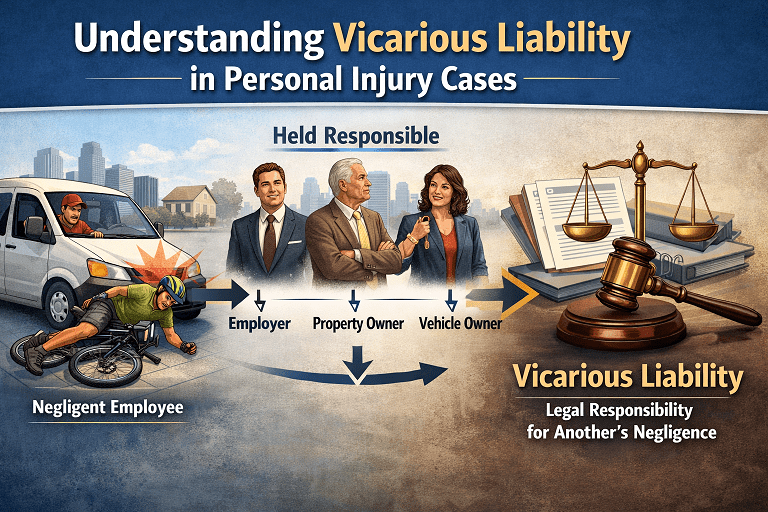
When an accident occurs and someone suffers injuries, the question of who should be held responsible isn’t always straightforward. While we typically think of holding the person who directly caused the harm accountable, the law recognizes situations where another party—often an employer, property owner, or vehicle owner—can be held legally responsible for someone else’s negligent actions. This legal doctrine is known as vicarious liability, and it plays a crucial role in personal injury cases.
What Is Vicarious Liability?
Vicarious liability is a legal principle that allows an injured party to hold one person or entity responsible for the actions of another, even when the party being held liable did not directly cause the injury. This concept might seem counterintuitive at first—why should someone be held accountable for another person’s mistakes? However, vicarious liability serves important purposes in our legal system, including ensuring that injured victims have access to compensation and encouraging employers and owners to maintain proper supervision and safety standards.
The foundation of vicarious liability rests on the relationship between the person who caused the harm and the party being held responsible. This relationship creates a legal duty for the liable party to answer for the wrongful acts committed by another person under specific circumstances.
Employer Liability for Employee Actions
The most common application of vicarious liability occurs in the employer-employee relationship. Under the legal doctrine of “respondeat superior,” which translates to “let the master answer,” employers can be held responsible for the negligent acts of their employees when those acts occur within the scope of employment.
The Scope of Employment
Determining whether an employee was acting within the scope of employment is crucial to establishing employer liability. Generally, an employee acts within the scope of employment when performing work-related duties or tasks that benefit the employer. This includes activities that occur during work hours, at work locations, or while using company equipment or vehicles.
For example, if a delivery driver causes an accident while making deliveries for their employer, the employer would likely be vicariously liable for any injuries resulting from that accident. Similarly, if a nurse makes a medical error while treating a patient at a hospital, the hospital may be held responsible for the nurse’s negligence.
However, the scope of employment has limits. When an employee engages in activities purely for personal reasons or ventures significantly outside their job duties, the employer may not be held liable. If that same delivery driver detours significantly from their route to run personal errands and causes an accident during that detour, the employer might argue the driver was not acting within the scope of employment.
Independent Contractors vs. Employees
An important distinction exists between employees and independent contractors. Generally, businesses are not vicariously liable for the actions of independent contractors because they don’t exercise the same level of control over how independent contractors perform their work. However, exceptions exist, particularly when the work involves inherently dangerous activities or when the hiring party retains significant control over how the work is performed.
Property Owner Liability
Property owners can also face vicarious liability in personal injury cases, though the circumstances differ from employer liability. While property owners have direct duties to maintain safe premises, they may also be held responsible for the actions of others on their property under certain conditions.
Negligent Hiring and Supervision
Property owners who hire contractors, security personnel, or maintenance workers may be held liable if they fail to properly screen, train, or supervise these individuals. This form of liability blends direct negligence with vicarious liability principles. For instance, if a property owner hires a security company without checking credentials and that security guard assaults a tenant, the property owner might share liability for failing to exercise reasonable care in selection and supervision.
Landlord Liability for Tenant Actions
In some jurisdictions, landlords can be held liable for injuries caused by their tenants’ actions, particularly when the landlord knew or should have known about dangerous conditions or activities. If a landlord is aware that a tenant is engaging in hazardous activities that could harm others and fails to take action, they may bear some responsibility for resulting injuries.
Vehicle Owner Liability
Vehicle ownership creates another avenue for vicarious liability. Many states have enacted statutes that hold vehicle owners liable for accidents caused by people driving their vehicles with permission, even if the owner wasn’t present during the accident.
Permissive Use Statutes
Under permissive use statutes, also called “family purpose doctrine” in some jurisdictions, vehicle owners can be held liable when they allow someone else to use their vehicle and that person causes an accident. The rationale is that by entrusting their vehicle to another driver, the owner assumes some responsibility for how that vehicle is operated.
For example, if a parent allows their teenager to borrow the family car and the teenager causes an accident due to distracted driving, the parent may be held vicariously liable for the injuries and damages resulting from that accident. This liability exists even though the parent wasn’t in the vehicle and didn’t directly contribute to the accident.
Negligent Entrustment
Beyond permissive use statutes, vehicle owners can face liability under the doctrine of negligent entrustment. This occurs when an owner knowingly allows an incompetent, inexperienced, or reckless driver to use their vehicle. If the owner knew or should have known that the driver posed a danger to others, they may be held responsible for the foreseeable consequences.
A classic example would be lending a vehicle to someone the owner knows has had their license suspended for drunk driving, or allowing an unlicensed teenager to drive alone. In these cases, the owner’s judgment in entrusting the vehicle to an unsafe driver forms the basis of liability.
Why Vicarious Liability Matters in Personal Injury Cases
Understanding vicarious liability is essential for both injury victims and potential defendants because it significantly impacts the ability to obtain compensation and the scope of potential liability.
Ensuring Adequate Compensation
One primary benefit of vicarious liability is ensuring that injury victims have access to adequate compensation. Individual employees or drivers may lack sufficient insurance or financial resources to fully compensate seriously injured victims. By holding employers or vehicle owners liable, victims can access deeper insurance pockets and greater financial resources.
Consider a scenario where a minimum-wage employee causes a serious accident while making deliveries. That employee likely lacks the personal resources to compensate a victim for substantial medical bills, lost wages, and pain and suffering. However, their employer presumably maintains commercial insurance designed to cover such situations, ensuring the victim can receive appropriate compensation.
Encouraging Safety and Supervision
Vicarious liability also serves a preventive function by incentivizing employers and owners to implement proper training, supervision, and safety protocols. When businesses know they can be held responsible for their employees’ actions, they have strong motivation to hire carefully, train thoroughly, and monitor performance effectively.
This creates a ripple effect that benefits public safety. Companies invest in driver safety programs, implement quality control measures, and establish clear policies regarding employee conduct, all of which reduce the likelihood of accidents and injuries.
Proving Vicarious Liability
Successfully establishing vicarious liability in a personal injury case requires proving several elements. The plaintiff must demonstrate that a relationship existed between the wrongdoer and the party being held vicariously liable, that the wrongful act occurred within the scope of that relationship, and that the act caused the plaintiff’s injuries.
Documentation plays a critical role in these cases. Employment records, vehicle registration documents, lease agreements, and witness testimony can all help establish the necessary relationships and circumstances. Accident reports, medical records, and expert testimony support the causation and damages elements of the claim.
Defenses to Vicarious Liability
Defendants facing vicarious liability claims have several potential defenses. They may argue that the person who caused the injury was acting outside the scope of their employment or authority. They might demonstrate that the wrongdoer was an independent contractor rather than an employee, or that the vehicle was taken without permission.
In some cases, defendants argue that they exercised reasonable care in hiring, training, and supervising, or that the injury resulted from an independent, intervening cause beyond their control. The success of these defenses depends heavily on the specific facts of each case and the applicable state laws.
Jurisdictional Variations
It’s important to note that vicarious liability laws vary significantly across jurisdictions. Some states have broad permissive use statutes that impose liability on vehicle owners in nearly all circumstances, while others limit such liability. Employment law nuances also differ from state to state, affecting when employers can be held responsible for employee actions.
Vicarious liability represents a fundamental principle in personal injury law that extends responsibility beyond the individual who directly caused harm. By holding employers accountable for employee actions, imposing liability on vehicle owners, and creating duties for property owners, this doctrine ensures that injured victims have meaningful access to compensation while simultaneously promoting safer practices across society.
Whether you’re an injury victim seeking compensation, an employer concerned about potential liability, or a vehicle owner wondering about your responsibilities, understanding vicarious liability is essential. These cases often involve complex legal questions requiring careful analysis of relationships, scope of authority, and applicable statutes. Given the significant financial stakes involved, consulting with an experienced personal injury attorney is advisable to navigate these intricate legal waters and protect your rights and interests.