Personal Injury Trends for 2025
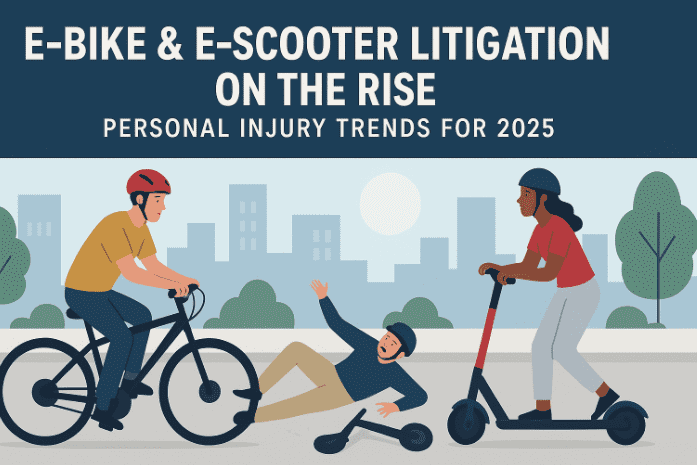
Electric bikes (e-bikes) and electric scooters (e-scooters) have exploded in popularity across the United States in recent years. Their growth has been fueled by the twin drivers of micro-mobility convenience and a growing awareness of climate-friendly transport. However, this boom has been accompanied by a sharp increase in accidents, injuries, and — consequently — personal injury litigation. As cities adapt to this influx of micromobility devices, the legal landscape is evolving rapidly.
We explore the major legal trends in 2025 around e-bike and e-scooter personal injury claims, including injury statistics, emerging regulatory frameworks, liability issues, and future prospects. We’ll also walk through what injured riders (or their attorneys) should watch for when evaluating or bringing these types of cases.
The Surge in Micromobility Injuries
One of the strongest drivers behind the rise in litigation is simply the skyrocketing rate of injuries. According to the U.S. Consumer Product Safety Commission (CPSC), injuries associated with micromobility devices jumped nearly 21% in 2022 compared to 2021.
Delving into more recent data, Avian Law Group’s Micromobility Accident Report 2025 highlights alarming trends: from 2017 to 2022, e-bike injuries surged, and e-scooter injuries rose even more steeply. Another analysis found that e-bike injuries went from about 751 in 2017 to over 23,000 in 2022, while e-scooter injuries grew from roughly 8,500 to nearly 57,000 in the same period.
These aren’t just minor bumps or scrapes — many of these accidents result in serious injuries. Common consequences include severe head trauma, internal injuries, fractures, and long-term neurological damage.
Why the Spike in Litigation?
1. Increased Exposure & Usage
The sheer increase in the number of e-bikes and e-scooters on the road contributes to higher risk. More devices on sidewalks, bike lanes, and streets mean more interactions with cars, pedestrians, and fixed obstacles. Shared scooter programs, which place e-scooters strategically around urban centers, make them more accessible — but also more exposed to risk.
2. Speed & Design Risks
Modern e-bikes and scooters are not low-speed toys. Some e-bikes, especially those modified or built for performance, can reach speeds well beyond 20 mph, placing them closer in risk to motor vehicles than traditional bicycles.
Moreover, design and manufacturing flaws sometimes come under scrutiny in litigation. For example, in one wrongful-death lawsuit, plaintiffs argued that a RadRunner e-bike had a defective brake/wheel setup that made it more likely to crash.
3. Inadequate Regulation & Legal Gray Zones
Regulation hasn’t kept pace with innovation. Many jurisdictions still classify e-bikes and e-scooters in broad “bicycle” categories, without sufficient nuance for speed, power, or risk.
Liability issues are also murky. When an e-scooter crashes, who is responsible — the rider, the rental company, the city, or the manufacturer? These questions are becoming more central in litigation.
4. Reporting & Data Improvements
Better reporting is helping fuel legal claims. For example, New York passed a law in 2024 requiring police and judicial officers to report crashes involving e-bikes and e-scooters, including identifying the specific type of vehicle.
This improved data collection can help plaintiffs prove the prevalence of incidents, identify patterns, and build stronger personal injury cases.
Key Legal Trends & Developments in 2025
A. Regulatory Reform Is Accelerating
- New York Reporting Law: NY now mandates crash reporting for e-bikes and e-scooters, requiring classifications on DMV forms and timely reporting by operators.
- Battery Safety Standards on the Horizon: Advocates push for stricter regulation around lithium-ion batteries — a known risk for fires.
- Local Age & Helmet Laws: Some localities are tightening rules. For instance, Marin County (California) passed an ordinance banning children under 16 from operating certain throttle-powered e-bikes and requiring helmets.
- Crash Reporting Enforcement: With improved crash-reporting laws, enforcement agencies and transport regulators can better track injury hotspots and develop targeted interventions.
B. Liability & Litigation Strategies Are Evolving
- Personal Injury Claims: Law firms are increasingly handling e-bike and e-scooter accident cases, alleging negligence, design defects, or wrongful death.
- Shared-Scooter Company Liability: Rental companies may be liable if maintenance, docking, or design contributed to crashes.
- Infrastructure & Government Liability: Inadequate bike lanes or poor road design could expose municipalities to litigation.
- Product Recalls & Defects: Injuries drive scrutiny on manufacturing quality. Plaintiffs may allege product liability if components were defective.
C. Demographic & Risk Factors
- Vulnerable Groups: Certain populations are disproportionately impacted, including non-Hispanic Black riders.
- Pediatric Risks: Children face higher injury rates, especially in urban environments.
- Risk Behavior: Many injured riders weren’t wearing helmets or were under the influence.
Litigation Risks & Opportunities for Plaintiffs
- Strong Evidence Collection: Police reports, scene photos, video, device inspection, and medical records are essential.
- Product Liability Claims: Design defects, manufacturing defects, or failure to warn can form the basis of litigation.
- Negligence / Duty of Care Arguments: Against riders, companies, or municipalities depending on the facts.
- Regulatory Leverage: Use compliance or noncompliance with reporting laws to strengthen claims.
- Class Actions or Mass Torts: Defective products or dangerous designs could lead to aggregated litigation.
Key Challenges for Litigation
- Regulatory Patchwork: Laws vary by city and state.
- Insurance Gaps: E-bikes and e-scooters are often uninsured.
- Usage vs. Risk Debate: Defense may argue injury increases reflect exposure, not danger.
- Data Standardization: Crash data remains inconsistent across jurisdictions.
Emerging Innovations & Legal Tech
- AI & Predictive Analytics: Analyze accident reports to extract causation and severity.
- AI-Assisted Safety: AI-enabled devices may reduce accidents but shift liability.
- Simulation Tools: Model interactions between vehicles and micromobility devices.
- Policy Advocacy: Push for standardized crash databases and stronger safety regulations.
Case Study: New York’s Legal Shift
- Accident Reporting Reform: Chapter 196 mandates reporting of e-bike and e-scooter incidents, specifying vehicle type.
- DMV Forms Updated: Improved classification improves data collection.
- Operator Reporting Obligations: Riders causing crashes with serious injuries must report.
- Implications: Strengthens plaintiffs’ ability to establish liability and systemic risk.
Practical Advice for Personal Injury Lawyers & Claimants
- Leverage crash reports, maintenance logs, and telematics data.
- Engage expert witnesses for design flaws and medical causation.
- Advocate for stronger regulation and safety standards.
- Educate clients on saving scene evidence and safe riding.
- Consider class actions for widespread defects.
Future Risks & Legal Directions
- Mandatory Safety Standards: Stricter rules may trigger recalls and liability.
- Insurance Extensions: Pressure for mandatory coverage may grow.
- Urban Design Liability: Poor infrastructure may increase municipal liability.
- Litigation Funding: More cases may attract funding for personal injury firms.
- AI Risk Mitigation: AI-driven safety tools may shift responsibility but improve safety.
The surge in e-bike and e-scooter usage has brought benefits, but also serious injury risks and legal implications. Personal injury litigation is rising, fueled by regulatory reforms, better reporting, and growing awareness of liability. Both attorneys and riders must stay informed to navigate this evolving legal landscape safely and effectively.