The Evolving Landscape of Personal Injury Claims in 2025-2026
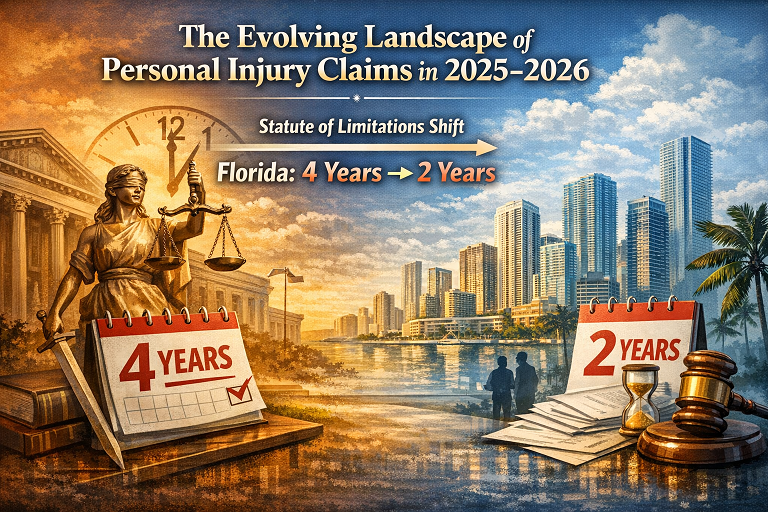
The statute of limitations represents one of the most critical elements in personal injury law, establishing the window of time within which an injured party must file a lawsuit to seek compensation for their damages. These time limits serve important purposes in the legal system, encouraging prompt resolution of disputes while evidence remains fresh and witnesses’ memories are reliable. However, recent years have witnessed a significant trend toward shortening these timeframes, with Florida’s dramatic reduction from four years to two years in 2023 serving as a watershed moment that continues to reverberate through the legal landscape in 2025 and 2026.
Understanding Statutes of Limitations
Before examining the recent changes, it’s essential to understand what statutes of limitations are and why they exist. A statute of limitations is a law that sets the maximum time after an event within which legal proceedings may be initiated. Once this period expires, the claim is typically barred forever, regardless of its merit. These laws exist across virtually all areas of civil and criminal law, but their application in personal injury cases has particular significance given the often life-altering nature of serious injuries.
The rationale behind statutes of limitations rests on several pillars. First, they promote fairness by preventing defendants from facing claims based on stale evidence where witnesses may have died, disappeared, or forgotten crucial details. Physical evidence may deteriorate or be lost over time, making it difficult for defendants to mount an adequate defense. Second, these time limits encourage plaintiffs to pursue their claims diligently rather than sleeping on their rights. Third, they provide finality and closure, allowing both parties to move forward with their lives once the statutory period has passed. Finally, they serve judicial efficiency by reducing the burden on courts to adjudicate ancient disputes.
The Florida Reduction: A Case Study in Legislative Change
Florida’s 2023 decision to cut the statute of limitations for personal injury claims from four years to two years represents one of the most significant recent changes in this area of law. This modification, part of broader tort reform efforts, has had profound implications for injured parties seeking compensation. The change was enacted as part of House Bill 837, a comprehensive tort reform package that Governor Ron DeSantis signed into law on March 24, 2023, with most provisions taking effect immediately.
The reduction to two years placed Florida among the states with the shortest statutes of limitations for personal injury claims. Previously, Florida’s four-year period was more generous than many other states, giving injured parties a longer window to evaluate their injuries, seek medical treatment, and determine whether legal action was necessary. The new two-year limit dramatically compressed this timeline, creating urgent pressure on potential plaintiffs to act more quickly.
This change was not made in isolation but rather as part of a broader legislative package that also modified rules regarding comparative negligence, medical damages, and attorney fees. Proponents of the reform argued that the shorter timeline would reduce frivolous lawsuits, lower insurance costs for businesses and individuals, and bring Florida in line with many other states that already had two-year or even shorter limitation periods. Critics, however, contended that the reduction would disproportionately harm legitimate claimants, particularly those with injuries that take time to manifest or who need extended periods to recover and understand the full extent of their damages.
The Ongoing Impact in 2025-2026
As we move through 2025 and into 2026, the effects of Florida’s shortened statute of limitations continue to unfold in ways both predictable and surprising. The most immediate impact has been on plaintiffs who suffered injuries shortly before or after the law’s enactment. Those injured in early 2023 before the law took effect technically had four years to file suit, but the change created significant confusion and prompted many attorneys to advise clients to file sooner rather than risk potential complications.
For injuries occurring after March 24, 2023, the two-year clock has been ticking steadily. Cases that might have been filed in 2027 or 2028 under the old law now face hard deadlines in 2025 and 2026. This compression has created a surge in filing activity as plaintiffs and their attorneys rush to meet the shortened deadlines. Personal injury attorneys report that they now must evaluate and prepare cases much more rapidly, sometimes before the full extent of injuries is known or before maximum medical improvement has been reached.
The shortened timeline has proven particularly problematic in cases involving latent injuries or conditions that develop gradually over time. Consider someone injured in a car accident in mid-2023 who initially appeared to have only minor injuries. If that person later discovers they have a herniated disc or traumatic brain injury that wasn’t immediately apparent, they may find their window for legal action has nearly closed by the time they receive a proper diagnosis and understand the long-term implications. Medical experts often note that some injuries, particularly those involving the brain, spine, or internal organs, may not fully manifest for months or even years after the initial trauma.
The change has also affected wrongful death cases in Florida, which previously had a two-year statute of limitations that has now been further complicated by the personal injury reduction. When someone dies from injuries sustained in an accident, their estate or family members must navigate complex questions about which statute of limitations applies and when the clock begins ticking. These questions become even more pressing when death occurs well after the initial injury, potentially leaving survivors with minimal time to pursue justice.
Broader National Trends
Florida is not alone in reconsidering its statutes of limitations for personal injury claims. Several other states have examined or implemented changes to their limitation periods, though not all have moved toward shorter timeframes. This patchwork of state laws creates a complex landscape for attorneys and plaintiffs, particularly in cases involving interstate commerce, travel, or defendants located in multiple jurisdictions.
The trend toward shorter statutes of limitations often emerges as part of broader tort reform movements, typically driven by business interests and insurance companies who argue that lengthy limitation periods increase uncertainty, raise insurance costs, and encourage litigation. These groups point to economic studies suggesting that states with shorter limitation periods and other tort reforms experience lower insurance premiums and a more favorable business climate. However, consumer advocates and plaintiff’s attorneys counter that these reforms primarily benefit corporate defendants at the expense of injured individuals who deserve adequate time to pursue legitimate claims.
Some states maintain longer limitation periods, with a few offering three, four, or even six years for certain types of personal injury claims. These variations reflect different legislative philosophies about balancing the rights of plaintiffs and defendants. States with longer periods tend to emphasize the principle that injured parties deserve adequate time to discover their injuries and pursue compensation, while states with shorter periods prioritize finality and reducing the burden on defendants and the court system.
Practical Implications for Injured Parties
The shortened statutes of limitations have created numerous practical challenges for individuals who suffer injuries. Perhaps most significantly, these changes require injured parties to make critical decisions about litigation much earlier in their recovery process. Under a four-year statute, someone injured in an accident could spend a year or more focusing entirely on physical and emotional recovery, obtaining necessary medical treatment, and returning to work before seriously considering legal action. With a two-year limit, that luxury largely disappears.
This compressed timeline can force plaintiffs to file lawsuits before they have reached maximum medical improvement, the point at which their condition has stabilized and doctors can reliably predict long-term outcomes. Filing early may mean underestimating future medical expenses, lost earning capacity, and ongoing pain and suffering. While cases can sometimes be amended to include additional damages discovered later, this is not always possible or practical, and it complicates the litigation process.
The time pressure also affects the quality of case preparation. Personal injury attorneys must now conduct investigations, gather evidence, consult with medical experts, and evaluate liability issues on a much tighter schedule. This can be particularly challenging in complex cases involving multiple parties, disputed liability, or technical issues requiring extensive expert analysis. Some attorneys report feeling pressured to file cases before they are fully developed simply to protect their clients’ rights, potentially leading to weaker initial pleadings or overlooked theories of recovery.
For unrepresented individuals, shortened statutes of limitations create even greater challenges. Many people who suffer injuries initially attempt to resolve their claims through insurance negotiations without hiring an attorney. If these negotiations drag on or prove unsuccessful, the injured party may suddenly discover that the statute of limitations is approaching and they need legal representation immediately. Finding qualified counsel, signing retainer agreements, and allowing the attorney time to investigate and prepare the case becomes extremely difficult when only months or weeks remain before the deadline.
The Insurance Industry Perspective
Insurance companies and their advocates have generally supported shorter statutes of limitations, viewing them as a positive development that brings greater predictability and reduces long-tail liability exposure. From their perspective, shorter limitation periods allow insurers to close claims files sooner, improve their ability to forecast reserves, and reduce the overall cost of maintaining claims infrastructure. These savings, proponents argue, can be passed on to policyholders through lower premiums.
However, the evidence regarding premium reductions following tort reform remains contested. While some studies show modest decreases in certain insurance markets following reforms, others find minimal impact or suggest that savings are retained by insurers rather than passed to consumers. In Florida specifically, the promised insurance savings following the 2023 reforms have yet to materialize for many policyholders, leading to ongoing political debates about whether the changes achieved their stated objectives.
Constitutional and Legal Challenges
The Florida statute change and similar modifications in other states have faced legal challenges on various grounds. Some plaintiffs have argued that retroactive application of shortened statutes of limitations violates due process rights, particularly when the change eliminates an existing right to sue. Florida courts have generally held that the legislature has broad authority to modify statutes of limitations, provided the change does not retroactively bar claims that were previously valid.
Other challenges have focused on equal protection arguments, suggesting that shortened statutes of limitations discriminate against certain classes of plaintiffs, such as those with latent injuries or minors who may not discover harm until years after an incident. While these challenges have met with limited success, they reflect broader concerns about fairness and access to justice.
Looking Ahead
As 2026 approaches, the full impact of Florida’s shortened statute of limitations continues to unfold. Data from the court system will eventually reveal whether the change reduced overall litigation volume as supporters predicted or simply compressed the timeline in which cases are filed. Early indicators suggest that filing patterns have shifted, with more cases being initiated earlier in the post-injury period, but total volume may not have decreased significantly.
The Florida experience serves as a natural experiment that other states will undoubtedly study as they consider their own statutes of limitations. If Florida demonstrates clear benefits from the change without disproportionately harming injured parties, other states may follow suit. Conversely, if the shortened timeline creates significant access to justice issues or fails to deliver promised economic benefits, the trend toward shorter limitation periods may slow or reverse.
For now, the message to anyone injured in Florida or another state with a short statute of limitations is clear: time is of the essence. Injured parties must act quickly to preserve their legal rights, consulting with qualified attorneys soon after an injury occurs rather than waiting to see how their condition develops. While this urgency may seem to favor defendants and insurers, it reflects the current legal reality in an evolving landscape where the balance between plaintiff and defendant rights continues to shift in ways that will shape personal injury law for years to come.