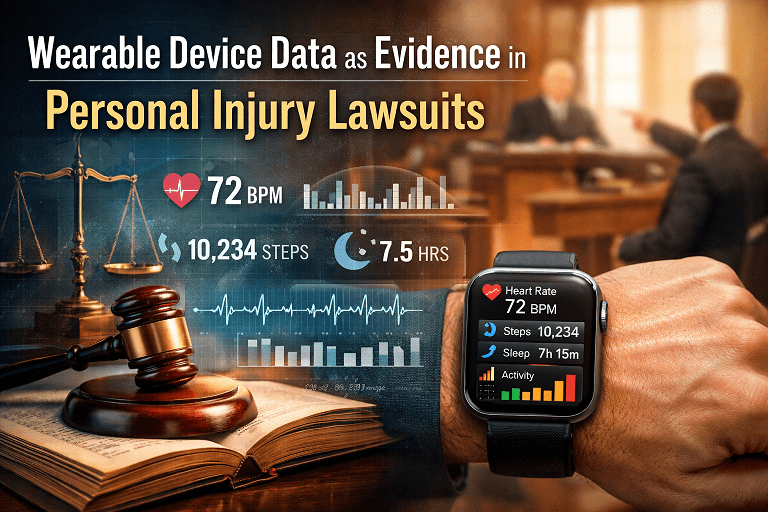
The intersection of technology and law has created a new frontier in personal injury litigation. Data collected from wearable devices such as Apple Watches, Fitbits, Garmin smartwatches, and other fitness trackers has emerged as a powerful form of evidence in courtrooms across the country. These devices, which millions of Americans wear daily to monitor their health and fitness, are now playing an increasingly significant role in determining the outcomes of personal injury cases.
The Rise of Wearable Technology in Legal Proceedings
Wearable technology has experienced explosive growth over the past decade. According to industry reports, over 100 million wearable devices were shipped in the United States in recent years, with smartwatches and fitness trackers dominating the market. These devices continuously collect vast amounts of physiological data, including heart rate, sleep patterns, step counts, exercise intensity, calorie expenditure, and even blood oxygen levels.
What makes this data particularly valuable in legal contexts is its objective, continuous nature. Unlike self-reported symptoms or sporadic medical examinations, wearable devices create an uninterrupted record of a person’s physical activity and physiological responses over extended periods. This creates a digital footprint that can either support or contradict injury claims in personal injury lawsuits.
The legal community has taken notice. Attorneys on both sides of personal injury cases are increasingly requesting wearable device data during discovery proceedings. Insurance companies, in particular, have shown keen interest in this information as they seek to verify the severity and legitimacy of injury claims.
How Wearable Data Is Used by Insurance Companies
Insurance companies and defense attorneys have embraced wearable device data as a tool to challenge personal injury claims. Their approach is straightforward: if someone claims to be severely injured and unable to engage in normal physical activities, their wearable device data should reflect significant limitations in movement and activity levels.
Defense teams use this data to identify inconsistencies between claimed injuries and actual behavior. For example, if a plaintiff claims they cannot walk more than a few steps without severe pain, but their Fitbit shows they regularly achieve 8,000 steps per day, this discrepancy can seriously undermine their credibility. Similarly, if someone claims total disability but their Apple Watch reveals regular workouts or sustained periods of elevated heart rate consistent with physical exertion, insurance companies will argue the injuries are exaggerated.
The data can also be used to establish baselines and track recovery. By comparing pre-accident activity levels with post-accident data, insurance adjusters can argue that a claimant has returned to normal functioning much sooner than they admit. This information directly impacts settlement negotiations and can significantly reduce the compensation offered or awarded.
Sleep data presents another avenue for insurance companies to challenge claims. While plaintiffs may assert that injuries cause severe sleep disruption, wearable devices can reveal whether sleep patterns have actually changed following an accident. If the data shows consistent, quality sleep, it may contradict claims of chronic pain that prevents rest.
Insurance companies argue that this objective data provides a more accurate picture than subjective complaints. They contend that wearable device information helps prevent fraudulent claims and ensures that compensation is proportionate to actual injuries sustained.
How Plaintiffs Leverage Wearable Data
While insurance companies have been quick to request wearable data to challenge claims, plaintiffs’ attorneys have discovered that this same technology can powerfully support their clients’ cases. When used strategically, wearable device data can provide compelling evidence of injury severity and ongoing symptoms.
For plaintiffs claiming soft tissue injuries, chronic pain, or conditions that are difficult to objectively measure through traditional medical testing, wearable data offers quantifiable proof of impairment. A significant drop in daily step counts following an accident can demonstrate reduced mobility. Decreased exercise intensity or frequency can show diminished physical capacity. These metrics transform subjective complaints into objective data points.
Sleep disruption is particularly well-documented by modern wearable devices. Many smartwatches and fitness trackers monitor sleep stages, including light sleep, deep sleep, and REM sleep, while also tracking nighttime movements and awakenings. For plaintiffs suffering from pain-related sleep disturbances, this data can validate claims that might otherwise be dismissed as exaggerated. A pattern showing frequent nighttime awakenings, reduced deep sleep, or overall poor sleep quality following an injury provides tangible evidence of ongoing suffering.
Heart rate variability data can also support injury claims. Chronic pain and stress often manifest in altered heart rate patterns, and wearable devices capture this information continuously. Plaintiffs can use this data to demonstrate the physiological impact of their injuries beyond what is visible in standard medical examinations.
Recovery progression is another area where wearable data helps plaintiffs. By showing gradual improvements in activity levels and sleep quality over months or years, plaintiffs can document the lengthy recovery process and justify claims for extended damages. This is particularly valuable in cases where insurance companies argue that recovery should have been faster.
Some plaintiffs have successfully used wearable data to counter surveillance evidence. If an insurance company presents video footage of a plaintiff engaging in an activity that appears inconsistent with their claimed injuries, wearable data showing low overall activity levels, elevated heart rate during minimal exertion, or pain-related limitations can provide context and support the plaintiff’s position.
Types of Data Collected and Their Legal Relevance
Modern wearable devices collect an impressive array of health and activity data. Understanding what information these devices capture helps explain their growing importance in litigation.
Step counts represent the most basic metric, tracking daily movement and providing insight into overall activity levels. A dramatic decrease in average daily steps following an accident suggests genuine mobility limitations.
Heart rate monitoring occurs continuously on most devices, capturing resting heart rate, exercise heart rate, and heart rate variability. This data can reveal cardiovascular stress, pain responses, and fitness levels.
Sleep tracking has become increasingly sophisticated, with devices monitoring total sleep time, sleep stages, sleep efficiency, and nighttime disruptions. This information is invaluable for plaintiffs claiming pain-related sleep problems.
Exercise and workout data includes duration, intensity, type of activity, and calories burned. This information can show whether someone has maintained, reduced, or eliminated their pre-accident exercise routine.
GPS and location data track movement patterns and can reveal whether someone’s daily routines have changed following an injury. This can support claims of reduced social activity or inability to travel.
Blood oxygen levels, available on newer devices, can indicate respiratory issues or overall health status. Some devices also monitor skin temperature, which can reflect inflammation or infection.
Fall detection and irregular heart rhythm notifications, while designed as safety features, can also serve as evidence of injury-related complications or ongoing health issues.
Admissibility Challenges and Legal Standards
Despite the growing use of wearable device data in personal injury cases, significant questions remain about its admissibility and reliability as evidence. Courts have approached this technology with varying degrees of acceptance.
One fundamental challenge involves authentication. Attorneys must establish that the data actually came from the device in question and belongs to the plaintiff or defendant. This typically requires testimony about the device’s ownership, consistent use, and proper functioning.
The accuracy and reliability of wearable devices have been questioned in some cases. Studies have shown that different devices can produce varying measurements for the same activity, and even the same device may show inconsistencies depending on how it’s worn or its battery level. Defense attorneys often challenge the scientific validity of the data, arguing that these devices are consumer products, not medical-grade instruments.
Chain of custody presents another concern. Data from wearable devices is typically stored in cloud-based systems and can be synchronized across multiple platforms. Establishing that the data has not been tampered with or altered requires careful documentation.
Privacy considerations also arise. While parties to litigation must generally disclose relevant evidence, the comprehensive nature of wearable device data means that production requests can capture highly personal information beyond what is necessary for the case. Courts must balance the relevance of the data against privacy interests.
Expert testimony often becomes necessary to interpret wearable device data and explain its significance to a jury. Biomechanics experts, physicians, and data analysts may be called upon to provide context for the raw numbers and explain what they reveal about injury severity and functional limitations.
Some courts have applied the Daubert standard, which requires scientific evidence to be relevant and reliable, to wearable device data. This means the party offering the evidence must demonstrate that the technology is generally accepted in the scientific community and that the data was collected using sound methodology.
Real-World Case Examples
Several notable cases have featured wearable device data as key evidence, illustrating both its potential and its limitations.
In one personal injury case, a plaintiff claiming severe mobility restrictions following a car accident produced Fitbit data showing that her daily step count had dropped from an average of 10,000 steps before the accident to fewer than 2,000 steps in the months following. This data supported her claims and contributed to a substantial settlement.
Conversely, an insurance company successfully challenged a disability claim by presenting Apple Watch data showing that the claimant, who alleged an inability to work due to back injuries, regularly engaged in activities including hiking and cycling that contradicted his claimed limitations. The data revealed exercise sessions lasting over an hour with elevated heart rates, undermining his credibility.
In a slip-and-fall case, a plaintiff’s attorney used sleep tracking data to demonstrate that his client’s sleep quality had dramatically declined following the incident. The data showed increased nighttime awakenings and reduced deep sleep, corroborating the plaintiff’s testimony about chronic pain affecting her quality of life.
A particularly interesting case involved competing interpretations of the same dataset. The plaintiff argued that reduced activity levels shown in her fitness tracker proved her injuries were severe, while the defense contended that the data showed she could still function at a reasonable level and that her claimed total disability was exaggerated. The jury ultimately sided with the plaintiff, but the case illustrated how the same data can be subject to different interpretations.
Privacy Concerns and Ethical Considerations
The use of wearable device data in litigation raises significant privacy concerns. These devices capture intimate details about daily life, including when someone sleeps, where they go, and even aspects of their romantic relationships through heart rate patterns.
When attorneys request wearable device data during discovery, they often seek months or years of continuous information. This can include data from periods before and after the alleged injury, potentially exposing irrelevant personal information. Some legal experts advocate for narrow, tailored discovery requests that limit data production to specific time periods and relevant metrics.
Plaintiffs who refuse to produce wearable device data may face negative inferences. Courts have held that if someone claims an injury but refuses to provide data that could verify their claims, juries can assume the data would have been unfavorable. This creates pressure on plaintiffs to surrender comprehensive health data even when they have privacy concerns.
The permanence of digital data is another worry. Once wearable device information is produced in litigation, it becomes part of the legal record and may be accessible to multiple parties. Future employers, insurers, or other litigants might potentially access this information.
Consent and expectations of privacy also factor into the analysis. When people purchase wearable devices, they typically agree to terms of service that allow manufacturers to collect and store their data. However, users may not anticipate that this information could later be used against them in legal proceedings.
Some privacy advocates argue for stronger protections for health data from consumer devices. They contend that while medical records receive significant legal protections under laws like HIPAA, information from wearable devices exists in a regulatory gray area with fewer safeguards.
The Future of Wearable Data in Litigation
As wearable technology becomes more sophisticated and ubiquitous, its role in personal injury litigation will likely expand. Several trends are emerging that will shape how this data is used in future cases.
Device capabilities are advancing rapidly. Modern smartwatches can perform electrocardiograms, detect atrial fibrillation, measure blood oxygen saturation, and assess fall risk. Future devices may monitor blood pressure, glucose levels, and other health markers continuously. This expanded data collection will provide even more detailed evidence about injury impacts.
Artificial intelligence and machine learning are being integrated into wearable devices to provide more sophisticated analysis of health patterns. These algorithms could identify subtle changes in behavior or physiology that indicate injury severity, though their use in litigation will likely face admissibility challenges.
Legal standards for wearable device data are evolving. As more courts address this evidence, precedents will develop regarding authentication, reliability, and admissibility. This will create more predictability for attorneys on both sides of personal injury cases.
Some jurisdictions may develop specific rules governing the discovery and use of wearable device data, potentially addressing privacy concerns while recognizing its probative value. Legislative action could clarify what data must be produced and under what circumstances.
The normalization of wearable technology means that more personal injury plaintiffs will have relevant data available. This will make it increasingly standard for attorneys to request this information, and its absence may become noteworthy.
Insurance companies may increasingly incentivize wearable device use among policyholders. Some insurers already offer premium discounts for customers who share fitness data. This trend could expand, potentially creating scenarios where policyholders contractually agree to provide wearable data if they file claims.
Best Practices for Attorneys
Attorneys handling personal injury cases should develop strategies for effectively using wearable device data, whether representing plaintiffs or defendants.
Early identification of wearable device evidence is crucial. During initial client interviews, attorneys should ask whether their clients or opposing parties use fitness trackers or smartwatches. This allows for timely preservation requests and prevents spoliation issues.
Preservation letters should specifically mention wearable device data. These letters should be sent immediately to ensure that relevant information is not deleted, either automatically by cloud storage limitations or intentionally.
Discovery requests must be carefully crafted to capture relevant data without being overly broad. Requests should specify the types of data sought, the time periods involved, and the format for production.
Expert witnesses can be essential for interpreting wearable device data. Attorneys should identify qualified experts who understand the technology and can explain its significance to judges and juries.
Data visualization helps make wearable device information accessible to fact-finders. Charts, graphs, and timelines can transform raw data into compelling demonstrative evidence.
Understanding device limitations is important for both challenging and supporting evidence. Different devices have different accuracy levels, and attorneys should be prepared to address these variations.
Wearable device data represents a significant evolution in how personal injury cases are proven and defended. These devices generate objective, continuous records of physical activity and physiological responses that can either support or undermine injury claims. Insurance companies use this data to identify inconsistencies and challenge exaggerated claims, while plaintiffs leverage it to document genuine symptoms like disrupted sleep, reduced mobility, and diminished physical capacity.
The technology raises important questions about privacy, data reliability, and admissibility that courts are still working to resolve. As devices become more sophisticated and widespread, their role in litigation will only grow. Attorneys must adapt to this new reality by developing expertise in identifying, preserving, and presenting wearable device evidence.
For personal injury claimants, the existence of wearable device data can be either a powerful asset or a significant liability, depending on whether it supports their claimed injuries. The objective nature of this evidence means that both plaintiffs and defendants must carefully consider how it affects their cases. As the legal system continues to grapple with this technology, one thing is clear: wearable device data has become an integral part of modern personal injury litigation, fundamentally changing how these cases are evaluated and resolved.