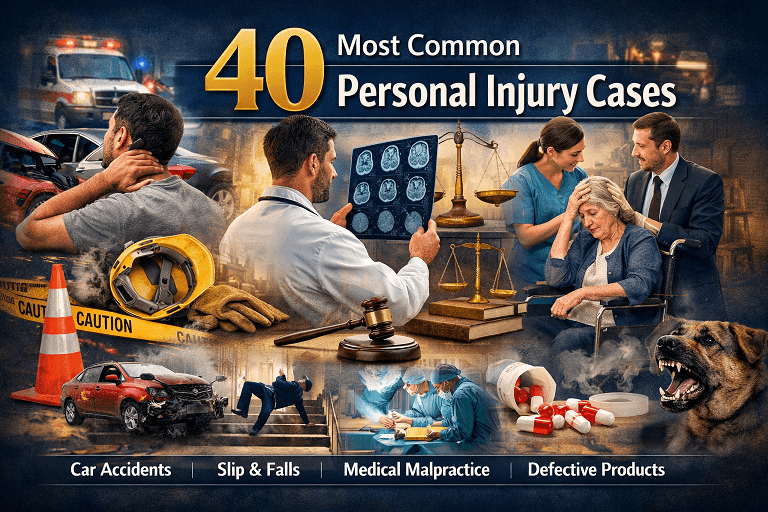
Personal injury law exists to protect individuals who are harmed due to another party’s negligence, recklessness, or intentional misconduct. These cases arise from everyday situations—driving, working, shopping, receiving medical care, or even walking down a sidewalk. While every claim is unique, most personal injury lawsuits fall into well-recognized categories that attorneys, insurers, and courts deal with regularly.
Understanding the most common types of personal injury cases can help injured individuals recognize when they may have a valid claim, what legal issues may be involved, and why compensation may be available. Below are the 40 most common personal injury cases, explained in detail.
1. Car Accidents
Car accidents are the most frequent source of personal injury claims. They often result from distracted driving, speeding, drunk driving, or failure to obey traffic laws. Injuries can range from minor whiplash to catastrophic brain or spinal cord injuries. Victims may seek compensation for medical bills, lost wages, pain and suffering, and vehicle damage.
2. Truck Accidents
Truck accidents involve commercial vehicles such as tractor-trailers and delivery trucks. Due to their size and weight, truck crashes often cause severe or fatal injuries. These cases are complex because multiple parties—drivers, trucking companies, cargo loaders, or manufacturers—may be liable, and federal trucking regulations often apply.
3. Motorcycle Accidents
Motorcyclists are especially vulnerable on the road. Even low-speed collisions can lead to broken bones, road rash, or traumatic brain injuries. Many motorcycle accident claims involve driver negligence, unsafe lane changes, or failure to yield, along with unfair bias against riders.
4. Pedestrian Accidents
Pedestrians struck by vehicles frequently suffer serious injuries because they have no physical protection. These accidents often occur at crosswalks, intersections, or parking lots and may involve distracted or speeding drivers. Compensation may include long-term medical care and loss of earning capacity.
5. Bicycle Accidents
Bicycle accidents commonly occur when motorists fail to share the road, open car doors unexpectedly, or violate traffic laws. Injuries may include fractures, head injuries, and internal trauma. Liability can rest with drivers, municipalities, or even bike manufacturers in certain cases.
6. Slip and Fall Accidents
Slip and fall cases are a major category of premises liability claims. They occur when property owners fail to fix hazards such as wet floors, uneven pavement, poor lighting, or icy walkways. Injuries may include fractures, back injuries, and head trauma.
7. Trip and Fall Accidents
Trip and fall accidents are similar to slip and fall cases but involve hazards like loose carpeting, exposed cords, broken stairs, or debris. Property owners may be held liable if they knew or should have known about the dangerous condition and failed to correct it.
8. Premises Liability Claims
Premises liability covers injuries that occur on another person’s property due to unsafe conditions. This includes slips and falls, negligent security, dog bites, and swimming pool accidents. The injured person must show the property owner failed to maintain reasonably safe conditions.
9. Dog Bite Injuries
Dog bite cases involve injuries caused by aggressive or unrestrained animals. Many states impose strict liability on dog owners, meaning victims do not have to prove negligence. Injuries may include puncture wounds, infections, scarring, and psychological trauma, especially in children.
10. Medical Malpractice
Medical malpractice occurs when healthcare providers fail to meet accepted standards of care. Examples include misdiagnosis, surgical errors, medication mistakes, and birth injuries. These cases are highly technical and often require expert medical testimony.
11. Nursing Home Abuse and Neglect
Elderly residents may suffer physical abuse, emotional abuse, neglect, or financial exploitation in nursing homes. Injuries can include bedsores, malnutrition, dehydration, and unexplained injuries. Families may bring claims to hold facilities accountable.
12. Workplace Accidents
Workplace injuries occur in offices, factories, construction sites, and warehouses. While workers’ compensation often applies, third-party personal injury claims may arise if someone other than the employer caused the injury, such as a contractor or equipment manufacturer.
13. Construction Accidents
Construction sites are inherently dangerous environments. Common injuries include falls from heights, electrocution, being struck by objects, and equipment accidents. These cases may involve multiple liable parties and serious, life-altering injuries.
14. Product Liability Claims
Product liability cases arise when defective or dangerous products cause injury. These may involve design defects, manufacturing defects, or failure to provide adequate warnings. Common examples include defective vehicles, medical devices, and consumer products.
15. Defective Medical Devices
Defective implants, surgical tools, or diagnostic devices can cause severe harm. Victims may suffer complications, infections, or long-term disability. Claims may be brought against manufacturers, distributors, or designers.
16. Dangerous Drugs
Pharmaceutical injury cases involve medications that cause unexpected side effects or were improperly tested or labeled. Victims may pursue compensation for long-term health consequences caused by unsafe prescription or over-the-counter drugs.
17. Wrongful Death
Wrongful death claims are brought by surviving family members when negligence causes a loved one’s death. These cases may arise from car accidents, medical malpractice, or workplace incidents. Compensation may include funeral costs, loss of income, and loss of companionship.
18. Brain Injuries (TBI)
Traumatic brain injuries are among the most serious personal injury claims. TBIs can result from vehicle crashes, falls, or assaults and may cause permanent cognitive, emotional, and physical impairments requiring lifelong care.
19. Spinal Cord Injuries
Spinal cord injuries often result in partial or total paralysis. These injuries dramatically impact quality of life and future earning capacity. Personal injury claims may seek compensation for medical treatment, rehabilitation, and adaptive equipment.
20. Burn Injuries
Burn injuries can occur in fires, explosions, chemical exposure, or electrical accidents. Severe burns may require surgeries, skin grafts, and long-term treatment, along with compensation for pain, disfigurement, and emotional trauma.
21. Amputation Injuries
Loss of a limb may result from traumatic accidents, machinery malfunctions, or medical negligence. Amputation cases often involve significant damages due to permanent disability, prosthetics, and loss of independence.
22. Back and Neck Injuries
Back and neck injuries, including herniated discs and soft tissue damage, are common in auto accidents and falls. These injuries may cause chronic pain and long-term mobility issues, even when imaging does not show obvious damage.
23. Whiplash Injuries
Whiplash frequently occurs in rear-end collisions. While often dismissed as minor, whiplash can cause lasting pain, headaches, and reduced range of motion, sometimes requiring extensive therapy.
24. Assault and Battery Injuries
Victims of physical attacks may bring personal injury claims against the attacker and, in some cases, property owners who failed to provide adequate security. These claims are civil actions separate from criminal proceedings.
25. Negligent Security Claims
Negligent security cases arise when property owners fail to provide reasonable protection against foreseeable criminal acts. Examples include assaults in poorly lit parking garages or apartment complexes with broken locks.
26. Swimming Pool Accidents
Swimming pool accidents often involve drowning, near-drowning, or slip and fall injuries. Property owners may be liable for failing to install proper fencing, supervision, or safety equipment.
27. Boating Accidents
Boating accidents may involve operator inexperience, intoxication, or equipment failure. Injuries can be severe, and claims may involve maritime law depending on where the accident occurred.
28. Aviation Accidents
Aviation injury cases include commercial airline crashes, private plane accidents, and helicopter incidents. These cases are complex and often involve federal regulations and extensive investigations.
29. Rideshare Accidents (Uber & Lyft)
Rideshare accidents involve unique insurance issues depending on whether the driver was logged into the app and transporting passengers. Victims may be passengers, pedestrians, or occupants of other vehicles.
30. Bus Accidents
Bus accidents may involve public transportation, school buses, or private charter buses. Claims may involve government entities, triggering special notice requirements and shorter filing deadlines.
31. Train and Subway Accidents
Railroad and subway accidents can result in mass injuries. Liability may rest with transportation authorities, operators, or maintenance contractors.
32. Workplace Toxic Exposure
Employees exposed to asbestos, chemicals, or other hazardous substances may develop serious illnesses over time. These cases often involve occupational diseases and long-term medical monitoring.
33. Environmental Injury Claims
Environmental injury cases involve harm caused by pollution, contaminated water, or hazardous waste exposure. Victims may suffer chronic illnesses linked to unsafe environmental conditions.
34. Child Injury Cases
Children may be injured in daycare centers, schools, playgrounds, or due to defective toys. These cases often involve heightened duties of care and consideration of long-term developmental impacts.
35. Birth Injuries
Birth injuries occur when medical negligence during labor or delivery causes harm to a newborn. Conditions such as cerebral palsy or brachial plexus injuries may require lifelong care.
36. Sports and Recreation Injuries
Sports injury claims may arise when negligence goes beyond ordinary risks, such as unsafe equipment, inadequate supervision, or reckless behavior by participants or organizers.
37. Defective Vehicle Parts
Defective brakes, airbags, tires, or steering systems can cause serious accidents. Claims may be brought against automakers or parts manufacturers under product liability law.
38. Elevator and Escalator Accidents
Malfunctioning elevators or escalators can cause sudden falls or crushing injuries. Liability may involve building owners, maintenance companies, or equipment manufacturers.
39. Fire and Explosion Injuries
Fires and explosions may result from gas leaks, electrical failures, or defective products. Victims often suffer severe burns, smoke inhalation injuries, and property loss.
40. Mass Tort and Class Action Injuries
Mass torts involve large groups of individuals injured by the same product or conduct, such as defective drugs or environmental disasters. Each victim retains an individual claim while benefiting from coordinated litigation.
Personal injury cases arise in countless ways, but they all share a common foundation: someone was harmed because another party failed to act responsibly. From everyday car accidents and slip and falls to complex medical malpractice and product liability claims, understanding the most common types of personal injury cases helps victims recognize when their rights may have been violated. Knowing how these claims work empowers injured individuals to take timely action, preserve evidence, and pursue fair compensation for medical expenses, lost income, and long-term suffering. While no two cases are exactly alike, a clear understanding of personal injury law can make the path to recovery—both physical and financial—more manageable and informed.