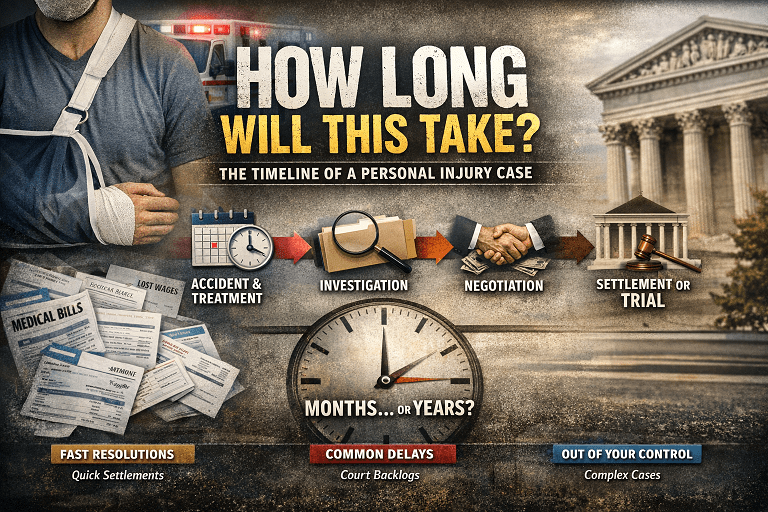
How Long Does Each Stage of a Personal Injury Case Actually Take?
When you’ve been injured due to someone else’s negligence, one of the most pressing questions on your mind is likely: “How long will this take?” Whether you’re dealing with mounting medical bills, lost wages, or simply want closure, understanding the realistic timeline of a personal injury case can help you set appropriate expectations and make informed decisions throughout the process.
The truth is that personal injury cases vary dramatically in duration. Some settle within a few months, while others can stretch on for years. While there’s no one-size-fits-all answer, breaking down each stage of the process reveals where time gets spent, what causes delays, and crucially, which factors you can influence and which remain beyond your control.
Stage 1: Initial Consultation and Case Evaluation (1-2 Weeks)
The journey typically begins with an initial consultation with a personal injury attorney. This first meeting usually happens within days to two weeks of your first contact with a law firm, depending on their availability and the urgency of your situation.
During this stage, the attorney will review the basic facts of your case, examine any documentation you’ve brought (accident reports, medical records, photographs), and assess whether you have a viable claim. Most personal injury attorneys offer free consultations and work on a contingency fee basis, meaning they only get paid if you win.
What you can control: You can expedite this stage significantly by coming prepared. Gather all relevant documentation before your consultation including police reports, witness contact information, photographs of the accident scene and your injuries, medical records and bills, insurance information, and any correspondence related to the incident. The more organized you are, the faster an attorney can evaluate your case.
What you can’t control: The attorney’s schedule and caseload will dictate how quickly you can secure an initial meeting. During busy periods or with high-demand attorneys, you might wait a week or two for an appointment.
Stage 2: Investigation and Evidence Gathering (1-3 Months)
Once you’ve hired an attorney, they’ll begin a thorough investigation of your case. This critical phase involves collecting evidence, interviewing witnesses, obtaining official reports, reviewing medical records, consulting with experts, and potentially visiting the accident scene.
For straightforward cases with clear liability and well-documented injuries, this stage might take just a few weeks. However, more complex cases involving multiple parties, disputed facts, or technical evidence can extend this phase to several months.
Your attorney might need to obtain surveillance footage before it’s deleted, secure maintenance records from property owners or vehicle manufacturers, consult with accident reconstruction experts, or hire medical professionals to review your treatment and prognosis. Each of these tasks takes time, and some depend on third parties responding to requests for information.
What you can control: Your responsiveness matters enormously during this stage. Promptly provide any information or documentation your attorney requests. Attend all medical appointments and follow your treatment plan religiously, as gaps in treatment can be used against you. Keep detailed records of how your injuries affect your daily life, including a pain journal or diary noting limitations and challenges.
What you can’t control: Third parties often cause delays during investigation. Businesses might take weeks to respond to records requests. Witnesses may be difficult to locate or reluctant to provide statements. Expert consultants have their own schedules and caseloads that can’t be rushed.
Stage 3: Medical Treatment and Reaching Maximum Medical Improvement (3-18+ Months)
Here’s a crucial point that many injury victims don’t initially understand: you generally shouldn’t settle your case until you’ve reached what’s called “maximum medical improvement” or MMI. This is the point at which your condition has stabilized, and doctors can reasonably predict whether you’ll have lasting impairments or require future treatment.
Settling before MMI is risky because you might accept compensation that doesn’t cover future medical expenses or adequately account for permanent disabilities. Once you settle, you typically cannot reopen the case if your condition worsens or requires additional treatment.
The timeline for reaching MMI varies enormously depending on your injuries. A minor soft tissue injury might stabilize in a few months, while serious injuries involving broken bones, spinal damage, traumatic brain injury, or burns can take a year or longer to heal. Some catastrophic injuries never fully heal, but doctors can still assess their permanent impact after sufficient time has passed.
What you can control: Following your doctor’s orders is paramount. Attend all appointments, complete prescribed physical therapy, take medications as directed, and follow activity restrictions. Non-compliance with medical treatment not only jeopardizes your health but also weakens your legal case, as insurance companies will argue you didn’t take reasonable steps to mitigate your damages. You can also seek second opinions if you have concerns about your treatment or prognosis.
What you can’t control: Healing takes time, and there’s no way to fast-forward your body’s recovery process. Some injuries simply require months or years of treatment. Additionally, medical providers’ schedules, insurance pre-authorizations for certain treatments, and wait times for specialists can all introduce delays beyond your control.
Stage 4: Demand Package and Initial Settlement Negotiations (1-3 Months)
Once you’ve reached MMI or your attorney has enough information to value your case accurately, they’ll prepare a demand package. This comprehensive document presents your case to the insurance company, including a narrative of the accident, evidence of liability, documentation of all your injuries and treatment, calculation of economic damages like medical bills and lost wages, assessment of non-economic damages such as pain and suffering, and a settlement demand.
Preparing a thorough demand package can take several weeks, as your attorney must compile extensive documentation and craft a persuasive argument. After submission, the insurance company typically has 30 to 60 days to respond, though this varies by jurisdiction and circumstances.
The initial response from the insurance company is almost always a lowball offer, sometimes insultingly low. This begins a negotiation process that can involve several rounds of back-and-forth, with each side making counteroffers and arguments. In cases with clear liability and reasonable damages, parties might reach an agreement after just a few weeks of negotiation. More contentious cases can see negotiations stretch for months.
What you can control: Your attorney’s negotiation strategy is something you’ll influence through open communication about your priorities and settlement expectations. You should understand that initial low offers are standard negotiating tactics, not final positions. Trust your attorney’s experience regarding whether an offer is reasonable, but ultimately, you make the final decision about whether to accept any settlement offer.
What you can’t control: The insurance company’s internal processes dictate much of this timeline. They may need to investigate the claim themselves, obtain approval from supervisors for offers above certain thresholds, or simply use delay as a negotiating tactic. Their workload and priorities are beyond your influence.
Stage 5: Filing a Lawsuit (If Necessary) (Timeline Varies)
If settlement negotiations stall or the insurance company refuses to make a reasonable offer, your attorney may recommend filing a lawsuit. It’s important to understand that filing a lawsuit doesn’t mean you’re necessarily headed to trial. In fact, the majority of personal injury lawsuits still settle before reaching a courtroom. However, filing suit does demonstrate your seriousness and opens up additional tools for gathering evidence through the discovery process.
The decision of when to file suit is strategic. Some attorneys file relatively quickly to pressure the insurance company, while others exhaust pre-litigation negotiations first. Either way, you must file within your state’s statute of limitations, which typically ranges from one to six years depending on the jurisdiction and type of case.
What you can control: The decision to file suit is ultimately yours, though you should rely heavily on your attorney’s recommendation. You can discuss your risk tolerance, financial situation, and how urgently you need resolution. Some people prefer to settle for less rather than endure the stress and uncertainty of litigation, while others are willing to pursue maximum compensation regardless of how long it takes.
What you can’t control: Court filing procedures and processing times vary by jurisdiction. Some courts have backlogs that mean your case won’t be assigned a trial date for many months after filing.
Stage 6: Discovery (6-12 Months)
Discovery is the formal process through which both sides exchange information and gather evidence. This is often the longest phase of litigation and includes written discovery where parties exchange interrogatories (written questions), requests for production of documents, and requests for admission, depositions where attorneys question witnesses and parties under oath, and expert witness retention and reports.
The discovery process is governed by strict rules and deadlines, but it’s also where cases often bog down. Disputes over what information must be disclosed can lead to motion practice, requiring court intervention. Each side typically has 30 days to respond to discovery requests, but extensions are common, and complex requests may require multiple rounds of follow-up.
Depositions must be scheduled around the availability of all parties, attorneys, and court reporters, which can be challenging when cases involve multiple defendants or expert witnesses. Expert witnesses also need time to review materials and prepare their reports, which can take weeks or months depending on their availability and the complexity of issues they’re addressing.
What you can control: Be prepared for your own deposition by meeting with your attorney beforehand, listening carefully to questions, answering honestly and completely, and remaining calm even if opposing counsel is adversarial. Your credibility is on display during your deposition, and inconsistent or evasive answers can seriously damage your case. Continue following your treatment plan and documenting how your injuries affect your life, as discovery often extends over many months during which your condition and treatment remain relevant.
What you can’t control: The opposing party’s cooperation largely determines discovery’s pace. If they’re slow to respond, dispute your discovery requests, or need multiple rounds of follow-up, delays accumulate. Court scheduling for motion hearings when disputes arise can add months to the process. Expert witnesses have their own practices and schedules that you can’t dictate.
Stage 7: Mediation and Further Settlement Discussions (1-3 Months)
Many courts require mediation before allowing a case to proceed to trial. Even when not mandatory, parties often agree to mediation as a cost-effective way to resolve their dispute. Mediation involves a neutral third party (the mediator) who facilitates negotiations and helps the parties reach a voluntary settlement.
Scheduling mediation depends on finding a date that works for both attorneys, the mediator, and any parties who need to attend. This alone can take weeks or months. The mediation session itself typically lasts a half-day or full day, during which the mediator shuttles between rooms, carrying offers and arguments back and forth.
Mediation is successful in resolving many personal injury cases, particularly once both sides have been through discovery and have a clearer picture of the evidence and likely trial outcome. However, if mediation fails, the case continues toward trial.
What you can control: Attend mediation with realistic expectations. Your attorney will advise you on reasonable settlement ranges based on the evidence developed during discovery. Come prepared to negotiate and potentially compromise. Cases that settle avoid the uncertainty, stress, and expense of trial, though you shouldn’t accept an unreasonably low offer just to avoid trial.
What you can’t control: The opposing party’s willingness to negotiate reasonably determines whether mediation succeeds. If they remain unreasonable or the gap between the parties’ positions is too large, mediation won’t result in settlement, and the case proceeds forward.
Stage 8: Trial Preparation and Pretrial Motions (2-6 Months)
If the case doesn’t settle during mediation or subsequent negotiations, it heads toward trial. The pretrial period involves significant preparation including finalizing witness lists and exhibits, preparing trial briefs, filing motions in limine to exclude certain evidence, attending pretrial conferences with the judge, and preparing witnesses for testimony.
This phase can be condensed if the trial date approaches quickly, but more commonly, it stretches over several months as attorneys balance this case with others in their practice. Pretrial motions can also delay matters if they raise substantive issues requiring court hearings and decisions.
What you can control: Continue being available and responsive to your attorney. You may need to help locate witnesses, review materials to refresh your memory about events, and prepare for your own testimony. Take trial preparation seriously, as your testimony will be crucial to the outcome.
What you can’t control: The court’s trial calendar dictates when your case will actually be heard. Trial dates are often set many months in advance and are sometimes continued (postponed) due to court scheduling conflicts, other cases running long, or emergencies. This can be frustrating, as you gear up emotionally for trial only to have it delayed.
Stage 9: Trial (3 Days to 3+ Weeks)
Personal injury trials vary greatly in length depending on case complexity. A straightforward car accident case might be tried in just a few days, while complex cases involving multiple defendants, technical evidence, and numerous witnesses can take weeks.
The trial process includes jury selection, opening statements, plaintiff’s case with witness testimony and evidence, defendant’s case, rebuttal, closing arguments, jury instructions, and deliberation and verdict.
For many injury victims, trial is the most stressful part of the process. You’ll testify about the accident and your injuries, and you’ll be cross-examined by the defense attorney who will challenge your credibility and claims. However, you’ll have the support of your attorney, who has prepared you for what to expect.
What you can control: Your demeanor and testimony at trial matter enormously. Dress appropriately, answer questions honestly and directly, remain calm and respectful, and demonstrate to the jury that you’re a credible, sympathetic plaintiff. Don’t exaggerate your injuries or damages, as juries can sense dishonesty.
What you can’t control: The jury’s verdict is ultimately beyond anyone’s control. Even with a strong case, juries can be unpredictable. They might award more than you expected, less, or even find in favor of the defendant. This uncertainty is why many cases settle before trial.
Stage 10: Post-Trial Motions and Appeals (2 Months to 2+ Years)
After a trial verdict, the losing party can file post-trial motions asking the judge to alter the verdict or order a new trial. If these are denied, they may appeal to a higher court, arguing that legal errors affected the outcome.
Appeals can add years to a case’s resolution, as appellate courts have their own schedules and backlogs. The appealing party files briefs, the other side responds, oral arguments may be scheduled, and eventually, the appellate court issues a decision, which might uphold the verdict, reverse it, or send the case back for a new trial.
What you can control: The decision whether to appeal (if you lose) or oppose an appeal (if you win) involves strategic considerations that you’ll make with your attorney’s guidance. Appeals are expensive and time-consuming, but sometimes necessary to correct injustices.
What you can’t control: The appellate process timeline is largely dictated by court rules and schedules. Appellate courts typically take many months to decide cases, and there’s little anyone can do to accelerate the process.
Common Factors That Cause Delays
Understanding what causes delays can help you set realistic expectations and potentially avoid some pitfalls. Common delay factors include:
Severity of injuries: More serious injuries require longer treatment periods before reaching MMI. Cases involving catastrophic injuries, permanent disabilities, or unclear prognoses naturally take longer to resolve because you need a complete picture of your damages before settling.
Disputed liability: When fault is contested, cases take longer as both sides gather evidence and potentially conduct extensive investigation. Accidents with multiple contributing factors or multiple potentially liable parties increase complexity and timeline.
Multiple defendants: Cases involving multiple defendants or parties, such as a truck accident involving the driver, trucking company, and vehicle manufacturer, inherently take longer due to coordination challenges and multiple insurance companies negotiating.
Inadequate insurance coverage: When the defendant’s insurance is insufficient to cover your damages, your attorney may need to identify additional sources of recovery, such as your own underinsured motorist coverage or other potentially liable parties. This investigation and negotiation adds time.
Bad faith insurance tactics: Some insurance companies employ delay tactics hoping you’ll accept a low settlement out of financial desperation. They might be slow to respond, make unreasonably low offers, or dispute clear liability. While frustrating, recognizing these tactics helps you resist pressure to settle prematurely.
Court backlogs: Court systems in many jurisdictions are overwhelmed with cases, leading to long waits for trial dates. Some jurisdictions have backlogs stretching years into the future, which is particularly problematic if your case doesn’t settle and requires trial.
Attorney caseload: While good attorneys handle multiple cases simultaneously, an overwhelmed attorney might not give your case adequate attention. This is why choosing an experienced personal injury attorney with adequate support staff is important.
Your own delays: Failing to attend medical appointments, not responding to your attorney’s requests for information, or being unavailable for your deposition can all slow your case unnecessarily.
Realistic Timeline Ranges by Case Type
While every case is unique, here are general timeline ranges for different types of personal injury cases:
Minor injury claims (soft tissue injuries, minor fractures): These cases might resolve in three to nine months if liability is clear and you reach MMI relatively quickly. Many settle without filing suit.
Moderate injury claims (significant fractures, injuries requiring surgery, moderate permanent impairment): Expect nine months to two years from accident to settlement. These often involve filing suit but settle during discovery or mediation.
Severe injury claims (traumatic brain injury, spinal cord injury, amputation, severe burns, significant permanent disability): These complex cases typically take two to four years or longer. They almost always require filing suit, extensive discovery including multiple expert witnesses, and may proceed to trial.
Wrongful death claims: These tragic cases typically take one to three years, as they involve complex damages calculations and often multiple family members as plaintiffs.
Medical malpractice claims: These highly technical cases usually take two to five years due to extensive expert testimony requirements, complex medical issues, and often vigorous defense by medical providers and their insurers.
Product liability claims: Cases against manufacturers for defective products typically take two to four years or longer, often involving extensive testing, multiple experts, and sometimes coordination with other similar claims.
Financial Pressures and Timeline Decisions
It’s important to acknowledge the elephant in the room: financial pressure. When you’re unable to work due to injuries, facing mounting medical bills, and possibly at risk of losing your home or falling into debt, the temptation to accept a quick settlement can be overwhelming.
Insurance companies know this and sometimes exploit it by making lowball offers early in the process, hoping you’ll accept out of desperation. While every situation is different, accepting an inadequate settlement because you need money immediately can be a costly mistake if you later discover your injuries are more serious than initially thought or require ongoing treatment.
Discuss financial pressures openly with your attorney. They may have suggestions such as negotiating payment plans with medical providers, accessing disability benefits, or potentially obtaining litigation funding. Some law firms can even help connect clients with resources to manage financial hardship during the case.
Setting Realistic Expectations
Given all these variables, how can you set realistic expectations for your specific case? Start by having an honest conversation with your attorney. Ask them to walk you through the likely timeline based on their experience with similar cases, and factors specific to your situation that might accelerate or delay resolution.
Understand that estimates are just that—estimates. Your case could settle next month or could still be ongoing in three years. Building flexibility into your expectations helps reduce frustration.
Stay focused on achieving fair compensation rather than fast compensation. While it’s natural to want your case resolved quickly, your primary goal should be obtaining a settlement or verdict that adequately covers all your damages and doesn’t leave you financially vulnerable down the road.
Remember that your attorney’s goal is also to resolve your case efficiently while maximizing your recovery. They’re not intentionally dragging things out. In fact, because most personal injury attorneys work on contingency, they’re not paid until your case resolves, so they have their own financial incentive to move cases forward.
Patience and Persistence
Personal injury cases test your patience. From the initial uncertainty after an accident through months or years of legal process, the wait for resolution can feel interminable, especially when you’re dealing with injuries, financial stress, and life disruption.
Understanding the realistic timeline helps manage expectations, but it doesn’t make the process easy. The key is recognizing which aspects you can influence through preparation, responsiveness, following medical advice, and cooperation with your attorney, and accepting the many factors beyond your control such as healing time, third-party responsiveness, court schedules, and insurance company tactics.
The personal injury legal process is designed to ensure that injured victims receive fair compensation for their losses. While the system isn’t perfect and can certainly be frustrating, it has evolved to balance the interests of all parties involved. Delays, while annoying, often serve important purposes in ensuring that cases are thoroughly investigated, damages are properly calculated, and outcomes are just.
Stay in regular communication with your attorney, who can provide updates and address concerns as they arise. Ask questions when you don’t understand what’s happening or why something is taking time. A good attorney will keep you informed throughout the process and help you understand the strategy behind timing decisions.
Finally, take care of yourself during this process. Personal injury cases are emotionally and physically draining. Focus on your health, lean on support systems, and remember that this challenging period will eventually end. When it does, you’ll hopefully have achieved fair compensation that helps you move forward with your life.