Premises Liability in the Sharing Economy
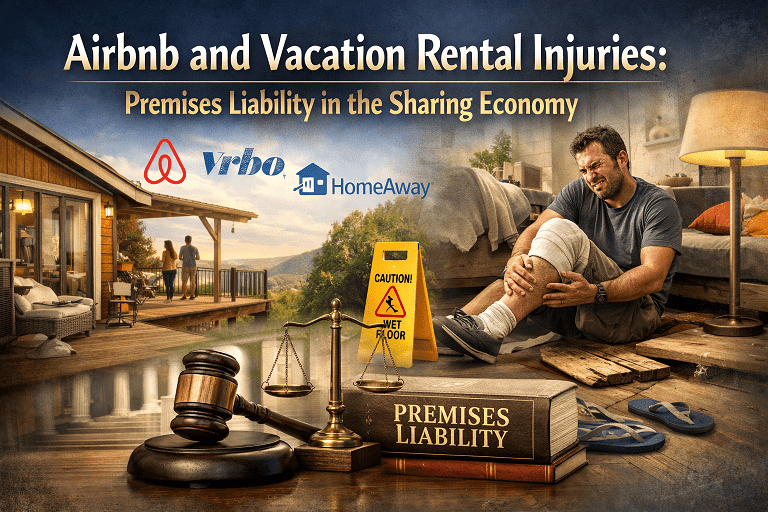
The sharing economy has fundamentally transformed how people travel and find accommodations. Platforms like Airbnb, Vrbo, and HomeAway have made it possible for millions of property owners to rent their homes, apartments, and rooms to travelers seeking alternatives to traditional hotels. While these platforms offer convenience, unique experiences, and often cost savings, they also present complex legal questions when guests suffer injuries on rental properties.
Premises liability law, which governs property owner responsibility for injuries occurring on their property, becomes significantly more complicated in the vacation rental context. Traditional hotel injury cases follow well-established legal precedents, but the decentralized nature of short-term rentals creates ambiguity about who bears responsibility when something goes wrong. Understanding these liability issues is crucial for both property owners and guests navigating the sharing economy.
Understanding Premises Liability Basics
Premises liability is a legal doctrine holding property owners and occupiers responsible for injuries that occur on their property due to unsafe conditions. Under this framework, property owners owe visitors a duty of care that varies depending on the visitor’s legal status. In most jurisdictions, visitors are classified as invitees, licensees, or trespassers, with invitees receiving the highest level of protection.
Vacation rental guests typically qualify as invitees because they enter the property for purposes related to the owner’s business interests. This classification means property owners must actively inspect their properties for hazards, remedy dangerous conditions, and warn guests about risks that aren’t obvious. The duty extends beyond simple maintenance to encompass reasonable measures ensuring the property is safe for its intended use.
Common premises liability claims in vacation rentals involve slip and fall accidents, inadequate security leading to assaults or theft, swimming pool drownings, balcony or deck collapses, carbon monoxide poisoning, fire hazards, and injuries from defective appliances or furniture. The property owner’s liability depends on whether they knew or should have known about the dangerous condition and whether they took reasonable steps to address it.
The Unique Challenges of Vacation Rental Liability
Unlike traditional hotels with professional management and regular safety inspections, vacation rentals exist on a spectrum from professionally managed properties to casual arrangements where homeowners rent out their residences occasionally. This diversity creates inconsistent safety standards across the industry. A boutique hotel undergoes regular inspections and must comply with specific safety codes, while a private homeowner listing their house on Airbnb may lack awareness of potential hazards or legal obligations.
The transient nature of short-term rentals compounds these challenges. Guests typically stay for brief periods, often arriving and departing without ever meeting the property owner. This limited interaction can make it difficult for owners to assess whether guests understand potential risks or for guests to communicate concerns about safety issues. Unlike long-term tenants who might report problems as they arise, vacation rental guests may not take the time to notify owners about hazards they encounter.
Property owners often rely on cleaning services or property management companies to prepare rentals between guests. This introduces additional parties into the liability chain. If a cleaning service fails to identify a broken stair railing or a property manager neglects to repair a faulty lock, determining who bears responsibility for resulting injuries becomes more complex. The contractual relationships between owners, managers, and service providers may shift liability in ways that aren’t immediately apparent to injured guests.
Platform Liability and the Question of Responsibility
One of the most contentious legal questions in sharing economy litigation involves whether platforms like Airbnb can be held liable for guest injuries. These companies generally position themselves as technology platforms connecting hosts and guests rather than as property managers or landlords. Their terms of service typically include disclaimers of liability and mandatory arbitration clauses designed to limit their legal exposure.
Courts have generally been reluctant to impose liability on these platforms for injuries occurring at listed properties. The Communications Decency Act provides platforms with broad immunity from liability for third-party content, which courts have interpreted to include property listings. Additionally, because platforms don’t own, control, or inspect the properties, they argue they shouldn’t be responsible for conditions they have no ability to address.
However, some legal experts argue that platforms exercise sufficient control over the rental process to warrant some degree of liability. These companies establish safety guidelines, can remove listings that violate policies, collect fees from transactions, and market themselves as trusted intermediaries. Some jurisdictions have begun exploring whether platforms should be required to verify basic safety features or face liability for failing to warn guests about known risks associated with specific properties.
Recent high-profile incidents have intensified scrutiny of platform responsibilities. Cases involving hidden cameras, carbon monoxide poisoning, and violent crimes at rental properties have prompted calls for greater platform accountability. Some platforms have responded by implementing new safety features, including carbon monoxide detector requirements and 24-hour safety lines, though these measures vary widely in scope and enforcement.
Host Responsibilities and Liability Exposure
Property owners who list their homes on vacation rental platforms assume significant legal responsibilities. Regardless of how infrequently they rent their property, hosts must ensure their premises meet basic safety standards. This includes maintaining structural integrity, ensuring electrical and plumbing systems function properly, providing adequate lighting in common areas, securing railings and staircases, maintaining pools and hot tubs according to local regulations, and ensuring smoke and carbon monoxide detectors are installed and operational.
Many homeowners underestimate their liability exposure when entering the vacation rental market. Standard homeowner’s insurance policies often exclude coverage for injuries to paying guests, creating a dangerous gap in protection. Some insurers deny claims when they discover the property was being used for commercial purposes without appropriate coverage. Hosts who assume their existing insurance will protect them may find themselves personally liable for substantial damages.
Smart hosts obtain specialized short-term rental insurance or commercial liability policies designed for vacation rental properties. These policies typically cover guest injuries, property damage, and loss of income if the property becomes uninhabitable. Some platforms offer host protection programs, but these often have significant limitations and exclusions that hosts should carefully review. Relying solely on platform-provided coverage without understanding its scope can leave hosts financially vulnerable.
Beyond insurance, hosts should implement proactive safety measures. Conducting regular property inspections, documenting maintenance and repairs, providing clear house rules and safety information, disclosing known hazards, and responding promptly to guest concerns can all reduce liability risk. Creating a paper trail demonstrating reasonable care can prove crucial if a liability claim arises.
Guest Injuries and Legal Recourse
When vacation rental guests suffer injuries, they face unique challenges pursuing compensation. Unlike hotel injuries where the responsible party is typically clear, vacation rental cases may involve multiple potentially liable parties, including the property owner, property management company, maintenance contractors, the booking platform, and even previous guests whose actions created hazards.
Injured guests must establish that the property owner or other responsible party breached their duty of care. This requires proving the defendant knew or should have known about the dangerous condition, that the condition posed an unreasonable risk of harm, that the defendant failed to take reasonable steps to remedy the danger or warn about it, and that the condition directly caused the injury. Gathering evidence to support these elements can be challenging, particularly when guests are unfamiliar with the property and local area.
Documentation becomes critical in vacation rental injury cases. Guests should photograph hazardous conditions, preserve communications with hosts about safety concerns, obtain contact information from witnesses, seek immediate medical attention and maintain records, and report incidents to the platform. These steps create an evidentiary foundation for potential claims while memories are fresh and physical evidence remains available.
Comparative negligence defenses often arise in vacation rental cases. Property owners may argue that guests contributed to their own injuries through carelessness or failure to heed warnings. Courts examine whether guests acted as reasonable persons would under similar circumstances. For example, a guest who ignores posted warnings about a steep staircase may have their damages reduced based on their percentage of fault, depending on the jurisdiction’s approach to comparative negligence.
Insurance Complications in the Sharing Economy
Insurance coverage presents one of the most significant challenges in vacation rental liability. Traditional insurance models weren’t designed for the sharing economy’s blurred lines between personal and commercial use. Homeowners who occasionally rent their properties may not realize they’re engaging in commercial activity requiring different coverage.
Many standard homeowner’s policies contain exclusions for business activities, meaning claims arising from paying guest injuries may be denied. Even when policies don’t explicitly exclude short-term rentals, insurers may void coverage if they discover the home was being rented without proper notification. Hosts who fail to disclose rental activity to their insurers risk both claim denials and policy cancellations.
The insurance industry has responded to the sharing economy by developing specialized products, but coverage remains inconsistent. Some insurers offer endorsements to homeowner’s policies covering short-term rental activity, while others require separate commercial policies. Coverage limits, deductibles, and exclusions vary widely. Hosts must carefully review policy language to understand what is and isn’t covered.
Guests also face insurance challenges. Their own health insurance typically covers medical expenses from vacation rental injuries, but additional damages like lost wages or pain and suffering require pursuing claims against responsible parties. Travel insurance may provide some coverage, but policies vary significantly in what they include. Guests should verify their coverage before traveling and understand how to access benefits if injuries occur.
Regulatory Landscape and Safety Standards
The regulatory environment for vacation rentals varies dramatically by jurisdiction. Some cities and states have enacted comprehensive regulations governing short-term rentals, while others have minimal oversight. This patchwork of rules creates confusion for hosts trying to comply with applicable requirements and inconsistent safety standards across regions.
Where regulations exist, they often address safety features like smoke detectors, carbon monoxide alarms, fire extinguishers, emergency exit signage, maximum occupancy limits, pool safety measures, and building code compliance. Some jurisdictions require regular inspections or safety certifications before properties can be listed. However, enforcement of these regulations is often inconsistent, with many municipalities lacking resources to monitor compliance effectively.
The absence of uniform safety standards means vacation rental safety depends heavily on individual host diligence. Unlike hotels, which must meet industry standards and undergo regular inspections, vacation rentals may never be professionally assessed for safety hazards. Guests have no reliable way to verify whether properties meet basic safety requirements before booking.
Some advocates have called for federal safety standards or platform-enforced minimum requirements. Proposals include mandatory safety inspections, standardized safety equipment requirements, host education programs, guest safety information disclosures, and incident reporting systems. However, implementing such measures faces resistance from property rights advocates and concerns about regulatory burdens on small-scale hosts.
Emerging Legal Trends and Future Considerations
As vacation rental litigation evolves, several trends are emerging. Courts are beginning to develop frameworks specifically addressing sharing economy liability questions. Some jurisdictions have extended innkeeper liability statutes to cover short-term rentals, holding hosts to similar standards as hotels. Others have created new regulatory categories with associated duties and liabilities.
Technology is also influencing liability issues. Smart home devices can create evidence of property conditions and guest behavior. Security cameras raise privacy concerns while potentially documenting how injuries occurred. Automated check-in systems eliminate personal interaction that might allow hosts to warn guests about hazards. These technological changes create new legal questions about surveillance, privacy, and the duty to warn.
The COVID-19 pandemic introduced additional liability considerations. Hosts face questions about their duties to sanitize properties and prevent disease transmission. Enhanced cleaning protocols have become standard, but determining liability when guests contract illnesses at rental properties remains legally uncertain. These issues will likely influence vacation rental liability law for years to come.
Looking forward, the vacation rental industry will likely see continued evolution in safety standards, insurance products, and liability frameworks. As the sharing economy matures, legal standards will become clearer, but hosts and guests currently navigate a complex and often uncertain legal landscape.
Protecting Yourself as a Host or Guest
For property owners, the best protection against liability is prevention. Conducting thorough property inspections, addressing hazards promptly, maintaining detailed records, obtaining appropriate insurance, providing clear safety information, and staying informed about local regulations can significantly reduce legal risk. When incidents do occur, responding professionally and documenting everything is essential.
Guests should research properties carefully before booking, reading reviews for mentions of safety concerns and verifying the host’s communication responsiveness. Upon arrival, guests should inspect the property for obvious hazards, test smoke and carbon monoxide detectors, note emergency exits, and report safety concerns immediately. If injuries occur, seeking medical attention and documenting everything provides the foundation for potential claims.
The sharing economy has democratized travel accommodations but also created legal complexities that traditional hospitality law doesn’t fully address. As courts, legislatures, and the industry continue adapting to this new landscape, both hosts and guests must understand their rights, responsibilities, and risks in vacation rental transactions.