After a car accident, one of the most pressing questions victims ask is: “How long until I receive my settlement?” While there’s no one-size-fits-all answer, understanding the factors that influence settlement timelines can help you set realistic expectations and navigate the claims process more effectively.
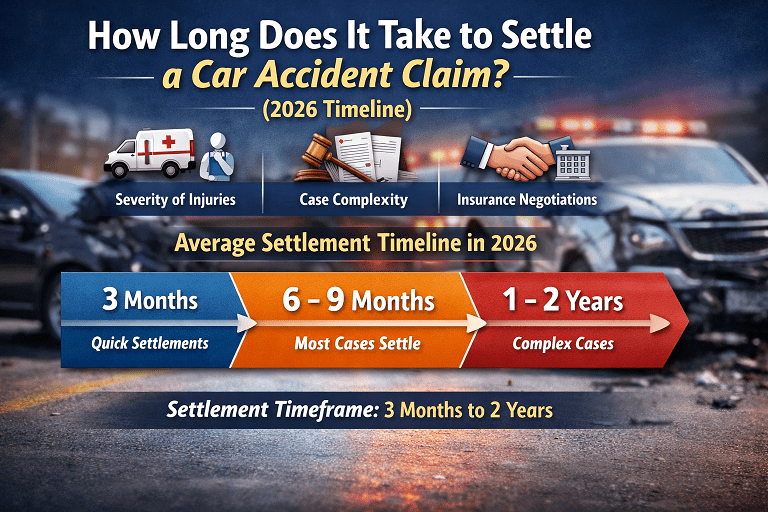
The reality is that car accident settlements can take anywhere from a few weeks to several years, depending on the complexity of your case, the severity of your injuries, and the willingness of insurance companies to negotiate fairly. In 2025-2026, the average settlement timeline ranges from three months to two years, with most straightforward cases resolving within six to nine months.
Understanding the Settlement Process
Before diving into specific timelines, it’s essential to understand the basic stages of a car accident claim. The process typically begins immediately after the accident with medical treatment and documentation, followed by filing a claim with the at-fault party’s insurance company. Once maximum medical improvement is reached, your attorney will calculate damages and submit a demand letter. Negotiations then commence, potentially leading to either a settlement agreement or, if necessary, litigation.
Each of these stages takes time, and rushing through them can result in inadequate compensation. Insurance companies often count on claimants being impatient, offering quick but lowball settlements to close cases rapidly. Understanding typical timelines helps you avoid this trap.
Factors That Affect Settlement Time
Severity of Injuries
The single biggest factor affecting settlement time is the severity of your injuries. Minor injuries like whiplash or soft tissue damage that heal within weeks allow for faster settlements because medical treatment concludes quickly. However, serious injuries requiring surgery, physical therapy, or long-term care significantly extend the timeline.
You should never settle a claim before reaching maximum medical improvement, the point at which your condition has stabilized and doctors can accurately assess permanent impairment or ongoing treatment needs. Settling prematurely means you might accept compensation that doesn’t cover future medical expenses or lost earning capacity.
Liability Disputes
Cases with clear liability settle faster than those where fault is contested. If the other driver ran a red light with multiple witnesses and a police report confirming the violation, the insurance company has little room to deny responsibility. However, in accidents involving multiple vehicles, conflicting accounts, or comparative negligence, determining fault becomes complicated and time-consuming.
Insurance companies often dispute liability to reduce their payout or deny claims altogether. They may conduct lengthy investigations, interview witnesses, hire accident reconstruction experts, and review surveillance footage. This process can add months to your settlement timeline.
Insurance Company Tactics
Some insurance companies are known for dragging out the settlement process, hoping claimants will accept lower offers out of financial desperation. They may request excessive documentation, delay responses, make unreasonably low initial offers, or repeatedly ask for the same information. These tactics can extend settlements by several months.
Working with an experienced attorney often counteracts these delays because lawyers understand these strategies and know how to keep the process moving forward while protecting your interests.
Policy Limits and Coverage Issues
When damages exceed the at-fault driver’s insurance policy limits, settlements become more complex. You may need to pursue compensation through your own underinsured motorist coverage, file claims against multiple parties, or pursue the at-fault driver’s personal assets. Each additional avenue of recovery adds time to the settlement process.
Coverage disputes, such as insurance companies denying that certain damages fall under the policy, also extend timelines as these issues must be resolved through negotiation or litigation.
Legal Representation
While hiring an attorney adds another party to the process, it typically speeds up settlements rather than delaying them. Attorneys handle documentation, negotiations, and legal procedures efficiently, preventing common mistakes that cause delays. Insurance companies also tend to take represented claimants more seriously, leading to more reasonable initial offers.
Typical Settlement Timelines by Case Type
Minor Injury Cases (1-3 Months)
Cases involving minor injuries with medical bills under $10,000, clear liability, and cooperative insurance companies can settle within one to three months. These are straightforward cases where the claimant recovers quickly, medical treatment is complete within weeks, and damages are easily calculated.
Anonymized Example: Sarah was rear-ended at a stoplight and suffered minor whiplash. She completed six weeks of chiropractic treatment totaling $3,500 in medical expenses. With clear liability and cooperative insurance, her attorney submitted a demand letter two weeks after her final treatment. The insurance company made a reasonable offer within ten days, and the case settled for $12,000 approximately 2.5 months after the accident.
Moderate Injury Cases (4-9 Months)
Most car accident cases fall into this category, involving injuries requiring several months of treatment, medical bills between $10,000 and $50,000, and potential lost wages. These cases take longer because treatment extends over several months, and negotiations are more involved.
Anonymized Example: Michael sustained a broken arm, facial lacerations, and soft tissue injuries in a multi-vehicle collision. He underwent surgery, physical therapy for four months, and missed two months of work. His attorney waited until maximum medical improvement at six months post-accident before submitting a demand letter. After two months of negotiations involving exchanges of medical records and economic documentation, the case settled for $87,000 approximately eight months after the accident.
Serious Injury Cases (9-18 Months)
Cases involving serious injuries such as broken bones requiring multiple surgeries, herniated discs, traumatic brain injuries, or significant scarring typically take nine months to 18 months to settle. These cases involve substantial medical treatment, long recovery periods, and complex damage calculations including future medical needs and diminished earning capacity.
Anonymized Example: Jennifer suffered a herniated disc and knee injury requiring two surgeries after being hit by a distracted driver. Her treatment lasted ten months, including multiple rounds of physical therapy and pain management. Her attorney engaged a medical expert to testify about future treatment needs and a vocational expert to address reduced earning capacity. After submitting a comprehensive demand package at eleven months post-accident, negotiations took another four months before settling for $340,000, approximately 15 months after the collision.
Catastrophic Injury Cases (18+ Months)
Cases involving catastrophic injuries such as spinal cord injuries, severe traumatic brain injuries, amputations, or permanent disability often take 18 months to several years to settle. These cases require extensive medical treatment, life care planning, economic analysis of lifetime costs, and often involve policy limits requiring pursuit of multiple sources of recovery.
Anonymized Example: Robert suffered a severe traumatic brain injury and multiple fractures when struck by a drunk driver. His medical treatment continued for over a year, with ongoing cognitive rehabilitation expected for years. His attorney retained multiple experts including neurologists, life care planners, and economists to document lifetime care needs exceeding $3 million. The case involved the at-fault driver’s insurance policy limits, the bar that overserved the drunk driver, and Robert’s underinsured motorist coverage. After extensive negotiations and mediation, the case settled for $2.7 million approximately 22 months after the accident.
Disputed Liability Cases (12-36+ Months)
When liability is seriously contested, settlements take significantly longer regardless of injury severity. These cases may require extensive discovery, depositions, expert testimony, and sometimes trial. Even moderate injury cases can take two to three years when fault is disputed.
Anonymized Example: In a case involving three vehicles at an intersection with conflicting witness statements and no traffic camera footage, each driver blamed the others. Despite relatively moderate injuries totaling $45,000 in medical expenses, the liability dispute extended the case. After 14 months of investigation, depositions, and expert analysis, the case went to mediation where it settled for $95,000 distributed among the claimants based on comparative fault percentages, approximately 26 months after the accident.
The Role of Litigation
While most car accident cases settle without filing a lawsuit, some require litigation to achieve fair compensation. Filing a lawsuit doesn’t mean going to trial; it’s often a negotiation tactic that demonstrates your commitment to pursuing full compensation. Insurance companies frequently make better settlement offers after a lawsuit is filed.
If a lawsuit becomes necessary, expect the timeline to extend significantly. From filing to trial, cases typically take 12 to 24 months, though this varies by jurisdiction and court backlog. Discovery, motions, and trial preparation all consume time. However, most cases settle before trial, often during mediation or as the trial date approaches.
How to Expedite Your Settlement
While you can’t control every factor affecting your settlement timeline, certain actions can help move the process along more efficiently.
First, seek immediate medical attention and follow all treatment recommendations. Gaps in treatment give insurance companies ammunition to argue your injuries weren’t serious. Complete, consistent medical records strengthen your case and prevent delays caused by disputes over injury causation.
Second, document everything meticulously. Keep copies of medical bills, receipts, pay stubs showing lost wages, photographs of injuries and vehicle damage, police reports, and all correspondence with insurance companies. Organized documentation allows your attorney to prepare a strong demand package quickly.
Third, avoid giving recorded statements to the other driver’s insurance company without consulting an attorney. These statements can be used against you and complicate negotiations.
Fourth, be patient and don’t accept the first offer. Insurance companies typically make lowball initial offers, expecting counteroffers. Accepting too quickly almost always means leaving money on the table.
Fifth, maintain open communication with your attorney. Respond promptly to requests for information and keep them updated on your medical treatment and recovery. Attorney-client communication breakdowns cause unnecessary delays.
When to Consider Alternative Dispute Resolution
If negotiations stall but you want to avoid lengthy litigation, alternative dispute resolution methods like mediation or arbitration can help. Mediation involves a neutral third party facilitating negotiations between you and the insurance company. While non-binding, mediation often breaks impasses and leads to settlement.
Arbitration involves presenting your case to a neutral arbitrator who makes a binding decision. Some insurance policies require arbitration for certain disputes. While faster than litigation, arbitration requires careful consideration because you give up your right to trial.
These methods typically occur 6 to 12 months into the claims process when traditional negotiations have reached an impasse but parties want to avoid the expense and time of litigation.
Red Flags and Unreasonable Delays
While settlement timelines vary legitimately based on case complexity, certain red flags indicate unreasonable delays. If your insurance adjuster is unresponsive for weeks, repeatedly requests the same documentation, makes no reasonable settlement offer after receiving your demand package, or provides no explanation for delays, you may be experiencing bad faith insurance practices.
State laws vary on what constitutes unreasonable delay, but generally, insurance companies must investigate claims promptly, respond to communications within reasonable timeframes, and make settlement offers or denials within specified periods after receiving necessary documentation.
If you suspect bad faith, document all communications, note dates and times of attempts to contact the adjuster, and consult with an attorney about your options, which may include filing a bad faith insurance claim in addition to your accident claim.
The Bottom Line on Settlement Timelines
Car accident settlement timelines in 2025 range widely based on injury severity, liability clarity, insurance company cooperation, and case complexity. Minor injury cases with clear liability can settle in one to three months, while catastrophic injury cases or those with disputed liability may take two years or longer.
The key is focusing on maximizing your compensation rather than rushing to settlement. Quick settlements often mean inadequate compensation that doesn’t cover all your damages. While waiting is frustrating, especially when facing medical bills and lost income, patience typically results in substantially better outcomes.
Working with an experienced personal injury attorney helps navigate the process efficiently while protecting your rights. Attorneys understand how to move cases forward without compromising your compensation and can identify when insurance companies are employing delay tactics versus when additional time serves your interests.
Remember, every case is unique. These timelines provide general guidance, but your specific situation may differ. Focus on your recovery, document everything carefully, and work closely with your attorney to achieve the best possible outcome, regardless of how long it takes.