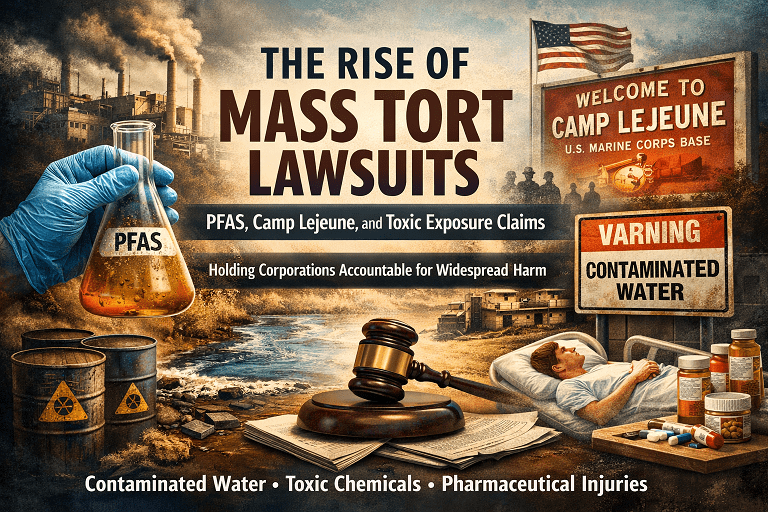
PFAS, Camp Lejeune, and Toxic Exposure Claims
In recent years, mass tort litigation has emerged as one of the most powerful legal mechanisms for holding corporations accountable when their products or actions cause widespread harm. From contaminated water supplies to dangerous pharmaceuticals, these lawsuits represent the collective voice of thousands of individuals who have suffered similar injuries due to corporate negligence. As we witness an unprecedented surge in toxic exposure cases, particularly involving PFAS chemicals and the Camp Lejeune water contamination, understanding the landscape of mass tort litigation has never been more critical.
Understanding Mass Tort Litigation: The Basics
Mass tort lawsuits differ significantly from class action suits, though many people confuse the two. In a mass tort case, each plaintiff maintains their individual lawsuit while the cases are grouped together for efficiency. This means that while the underlying facts may be similar, each person’s injuries, damages, and compensation remain unique to their circumstances.
Key Characteristics of Mass Torts:
- Individual Claims: Each plaintiff retains their own case with specific damages and injuries documented separately
- Common Defendants: All cases typically involve the same corporation or group of corporations responsible for the harm
- Similar Fact Patterns: While individual circumstances vary, all plaintiffs were harmed by the same product, substance, or action
- Coordinated Discovery: Evidence gathering and depositions are often shared to reduce duplication and costs
- Bellwether Trials: Selected cases go to trial first to establish precedent and gauge potential outcomes for remaining cases
The rise of mass tort litigation reflects a growing awareness of how corporate decisions can impact public health on a massive scale. These cases serve not only to compensate victims but also to deter future corporate misconduct and force accountability at the highest levels.
The PFAS Crisis: Forever Chemicals in Our Environment
Per- and polyfluoroalkyl substances, commonly known as PFAS or “forever chemicals,” represent one of the most significant environmental health crises of our time. These synthetic chemicals have been manufactured and used in countless consumer products since the 1940s, from non-stick cookware to water-resistant clothing, firefighting foam, and food packaging.
Why PFAS Earned the Name “Forever Chemicals”
PFAS compounds are called forever chemicals because they don’t break down in the environment or in the human body. Their molecular structure, featuring strong carbon-fluorine bonds, makes them extraordinarily persistent. This means that once these chemicals enter the environment or accumulate in your body, they remain there indefinitely, building up over time and potentially causing serious health problems.
Health Impacts Associated with PFAS Exposure:
- Cancer: Studies have linked PFAS exposure to kidney cancer, testicular cancer, and thyroid cancer
- Immune System Suppression: PFAS can reduce vaccine effectiveness and increase susceptibility to infections
- Reproductive Issues: These chemicals have been associated with pregnancy complications, decreased fertility, and developmental delays in children
- Liver Damage: Elevated liver enzymes and non-alcoholic fatty liver disease have been connected to PFAS exposure
- Thyroid Disease: PFAS can disrupt thyroid hormone production and function
- Cholesterol Changes: Exposure has been linked to increased cholesterol levels and metabolic disorders
The Scope of PFAS Contamination
What makes the PFAS crisis particularly alarming is its ubiquity. Recent studies have detected these chemicals in the blood of nearly every American tested. They’ve contaminated drinking water systems serving millions of people, agricultural land where crops are grown, and aquatic ecosystems that support fishing industries.
Manufacturing facilities that produced PFAS or used them in their processes have left lasting contamination in surrounding communities. Military bases where firefighting foam containing PFAS was routinely used during training exercises have become hotspots of contamination. Even areas far from obvious sources have been affected through atmospheric transport and deposition.
Current PFAS Litigation Landscape
Thousands of lawsuits have been filed against major chemical manufacturers including DuPont, 3M, Chemours, and others. These cases typically fall into several categories:
- Personal Injury Claims: Individuals who developed serious health conditions after PFAS exposure seeking compensation for medical expenses, lost wages, and pain and suffering
- Municipal Water System Claims: Cities and towns suing to recover costs of water treatment and system upgrades needed to remove PFAS contamination
- Property Damage Claims: Landowners whose property values have plummeted due to PFAS contamination or who face cleanup costs
- Agricultural Claims: Farmers whose livestock or crops have been contaminated, rendering them unsaleable
Several major settlements have already been reached. In 2023, 3M agreed to pay more than $10 billion to resolve water utility claims, while DuPont and its spinoff companies reached a $1.2 billion settlement. These landmark agreements acknowledge corporate responsibility while providing resources for affected communities to address contamination.
Camp Lejeune: Decades of Contaminated Water
The Camp Lejeune water contamination stands as one of the worst environmental disasters in United States military history. For more than three decades, from the 1950s through 1987, service members, their families, and civilian workers at Marine Corps Base Camp Lejeune in North Carolina were unknowingly exposed to drinking water contaminated with toxic chemicals at levels hundreds of times above safe standards.
The Contaminants: What Was in the Water?
Testing revealed that the water at Camp Lejeune contained dangerous levels of several volatile organic compounds:
- Trichloroethylene (TCE): A industrial solvent used for degreasing metal parts, found at levels up to 1,400 times the maximum safe limit
- Perchloroethylene (PCE): A dry cleaning chemical that leaked from an off-base dry cleaning facility
- Benzene: A known carcinogen used in various manufacturing processes
- Vinyl Chloride: Another cancer-causing chemical formed from the breakdown of other contaminants
Health Conditions Linked to Camp Lejeune Exposure
Decades of scientific research and epidemiological studies have established connections between the contaminated water at Camp Lejeune and numerous serious health conditions. The Agency for Toxic Substances and Disease Registry has documented elevated risks for:
- Various Cancers: Including bladder cancer, kidney cancer, liver cancer, multiple myeloma, non-Hodgkin’s lymphoma, and leukemia
- Parkinson’s Disease: A progressive neurological disorder affecting movement and cognition
- Birth Defects: Neural tube defects, cardiac malformations, and other congenital conditions in children born to exposed parents
- Miscarriage and Infertility: Reproductive complications affecting those exposed during their reproductive years
- Kidney Disease: Chronic kidney conditions requiring ongoing treatment or dialysis
- Liver Disease: Various forms of hepatic damage and dysfunction
The Camp Lejeune Justice Act: Opening the Door to Accountability
For years, victims of the Camp Lejeune water contamination faced significant legal obstacles in seeking justice. North Carolina’s statute of repose prevented lawsuits more than ten years after the harmful exposure, effectively barring most claims since the contamination wasn’t discovered until after the water was shut off.
This changed dramatically in August 2022 when President Biden signed the Camp Lejeune Justice Act into law as part of the PACT Act. This landmark legislation created a two-year window for victims to file claims in federal court, bypassing previous legal barriers.
Who Qualifies for Camp Lejeune Claims?
The Camp Lejeune Justice Act provides relief for a broad range of individuals who were exposed to the contaminated water:
- Military Personnel: Active duty service members stationed at Camp Lejeune for at least 30 days between August 1953 and December 1987
- Family Members: Spouses, children, and other dependents who lived on base during the contamination period
- Civilian Workers: Individuals employed at the base, including contractors and other non-military personnel
- In Utero Exposure: Individuals who were exposed while in their mother’s womb during the contamination period
The Response: Overwhelming Claims and Ongoing Litigation
Since the Camp Lejeune Justice Act became law, the response has been overwhelming. Tens of thousands of claims have been filed, representing what may become one of the largest mass tort litigations in American history. The sheer volume of claims reflects both the duration of the contamination and the serious health consequences that have emerged over the decades since exposure.
The litigation process involves extensive documentation of both exposure and health conditions. Claimants must prove they were present at Camp Lejeune during the contamination period and that they developed one of the qualifying health conditions. Medical records, military service records, and expert testimony all play crucial roles in establishing these connections.
Other Major Toxic Exposure Mass Torts
While PFAS and Camp Lejeune represent two of the most significant current mass tort cases, they’re part of a broader pattern of toxic exposure litigation that has emerged over recent decades. Understanding these other cases provides context for how mass torts function and their role in protecting public health.
Roundup and Glyphosate Litigation
The herbicide Roundup, manufactured by Monsanto (now owned by Bayer), has become the subject of extensive litigation after research linked its active ingredient, glyphosate, to non-Hodgkin’s lymphoma and other cancers. Tens of thousands of plaintiffs have alleged that exposure to Roundup while using it for agricultural, landscaping, or home garden purposes caused their cancer diagnoses.
Several bellwether trials resulted in substantial jury verdicts, with some awards exceeding $2 billion before reductions. Bayer has agreed to settlements totaling more than $10 billion to resolve existing and future claims, though litigation continues as new cases emerge.
Talcum Powder and Asbestos Contamination
Johnson & Johnson has faced thousands of lawsuits alleging that its talcum powder products, including baby powder and Shower-to-Shower, contained asbestos and caused ovarian cancer and mesothelioma. Internal company documents revealed that J&J knew about potential asbestos contamination for decades but continued marketing the products as safe.
This litigation has resulted in billions of dollars in verdicts and settlements, though the company maintains its products are safe. The controversy has prompted many retailers to discontinue selling talc-based body powders.
Opioid Crisis Litigation
Pharmaceutical manufacturers, distributors, and pharmacy chains face extensive litigation for their role in the opioid epidemic that has claimed hundreds of thousands of lives. These cases allege that companies aggressively marketed opioid painkillers while downplaying addiction risks and failed to prevent suspicious orders that fueled the crisis.
Major settlements have been reached with companies including Purdue Pharma, Johnson & Johnson, and the major pharmaceutical distributors, providing billions of dollars for addiction treatment, prevention programs, and compensation for affected communities.
3M Combat Arms Earplugs
Hundreds of thousands of military veterans filed suit against 3M over defective combat earplugs that allegedly failed to provide adequate hearing protection. Veterans claimed the earplugs were too short to be properly inserted, loosened during use, and failed to prevent hearing loss and tinnitus during combat and training.
This became one of the largest mass tort litigations in history, with more than 250,000 claims filed. After mixed results in bellwether trials, 3M agreed to a $6 billion settlement in 2023 to resolve the litigation.
The Process: How Mass Tort Lawsuits Work
Understanding how mass tort litigation proceeds helps potential claimants know what to expect and why these cases can take considerable time to resolve.
Filing and Consolidation
Individual plaintiffs file lawsuits in federal or state courts, typically in jurisdictions where they live, where they were exposed, or where the defendant corporations are located. When similar cases pile up across multiple federal districts, the Judicial Panel on Multidistrict Litigation may consolidate them into a single district for coordinated pretrial proceedings.
This consolidation, known as multidistrict litigation (MDL), allows for efficient management of discovery, expert testimony, and pretrial motions while preserving each plaintiff’s individual claim. A judge oversees the MDL, and attorneys are appointed to serve on leadership committees that coordinate the litigation on behalf of all plaintiffs.
Discovery and Investigation
During discovery, both sides gather evidence to support their positions. This phase can be extensive in mass tort cases and typically includes:
- Document Production: Defendants must produce internal communications, testing data, safety studies, and other relevant records
- Depositions: Sworn testimony from company executives, scientists, medical experts, and plaintiffs
- Expert Witness Preparation: Both sides retain specialists in toxicology, epidemiology, medicine, and other relevant fields
- Medical Records Review: Detailed examination of each plaintiff’s medical history and health conditions
Bellwether Trials
Rather than trying every case individually, courts select a small number of representative cases for bellwether trials. These trials serve several purposes:
- Testing Legal Theories: Both sides can see how juries respond to their arguments and evidence
- Gauging Case Values: Verdicts help establish reasonable settlement ranges for similar cases
- Encouraging Settlement: Strong plaintiff verdicts often motivate defendants to negotiate global settlements
- Identifying Weaknesses: Defense victories may prompt plaintiffs to reconsider weak claims
Settlement Negotiations
Most mass tort cases ultimately settle rather than going to trial. Settlement negotiations often intensify after bellwether trials provide insight into potential outcomes. Defendants may offer global settlements to resolve all pending and future claims, with individual compensation determined by factors such as:
- Severity of injuries and health conditions
- Duration and intensity of exposure
- Age at time of exposure and diagnosis
- Economic losses including medical expenses and lost income
- Strength of documentation linking exposure to injury
The Importance of Legal Representation in Mass Torts
While mass tort cases are coordinated for efficiency, each plaintiff needs competent legal representation to protect their individual interests and maximize their recovery.
Why Individual Attorneys Matter
Your attorney’s role goes beyond simply signing you up for a mass tort case. They are responsible for:
- Documenting Your Specific Claim: Gathering medical records, employment history, exposure evidence, and other case-specific materials
- Calculating Your Damages: Quantifying past and future medical expenses, lost wages, pain and suffering, and other losses unique to your situation
- Negotiating Your Settlement: Advocating for fair compensation based on your individual circumstances within the broader settlement framework
- Advising on Settlement Offers: Helping you understand whether settlement offers adequately compensate your injuries or if proceeding to trial might be warranted
What to Look for in Mass Tort Representation
Choosing the right attorney for a mass tort case requires consideration of several factors:
- Experience with Mass Torts: Look for attorneys who have successfully handled similar cases and understand the unique aspects of mass tort litigation
- Resources: Mass tort cases require significant financial resources for experts, investigations, and litigation costs
- Track Record: Review the firm’s history of verdicts and settlements in comparable cases
- Communication: Your attorney should keep you informed about case developments and be accessible when you have questions
- Fee Structure: Most mass tort attorneys work on contingency, meaning they only get paid if you recover compensation
The Broader Impact: How Mass Torts Protect Public Health
Beyond compensating individual victims, mass tort litigation serves crucial functions in protecting public health and deterring corporate misconduct.
Forcing Corporate Accountability
When corporations face billions of dollars in liability for dangerous products or environmental contamination, they’re forced to change their behavior. The threat of mass tort litigation encourages companies to:
- Conduct more thorough safety testing before releasing products
- Implement stronger quality control and monitoring systems
- Respond more quickly to emerging safety concerns
- Be more transparent about potential risks to consumers and the public
Uncovering Hidden Dangers
The discovery process in mass tort cases often reveals what corporations knew about dangers and when they knew it. Internal documents produced in litigation have exposed:
- Safety studies showing risks that were never disclosed to the public
- Corporate decisions to prioritize profits over public safety
- Deliberate efforts to suppress or discredit concerning research
- Knowledge of contamination or product defects that wasn’t acted upon
This information not only supports plaintiff claims but also informs regulatory agencies, public health officials, and the general public about risks they face.
Driving Regulatory Change
Mass tort litigation often precedes or accompanies regulatory action. The publicity surrounding these cases, combined with evidence uncovered through litigation, pressures government agencies to strengthen regulations and enforcement. PFAS litigation, for example, has coincided with the EPA proposing the first-ever federal limits on PFAS in drinking water.
Challenges and Criticisms of Mass Tort Litigation
While mass torts serve important functions, the system isn’t without challenges and critics.
Time and Complexity
Mass tort cases can take years to resolve, leaving plaintiffs waiting for compensation while dealing with ongoing medical issues and financial strain. The complexity of coordinating thousands of cases, conducting extensive discovery, and negotiating settlements that satisfy diverse plaintiff groups creates inherent delays.
Inconsistent Outcomes
Because each case is technically individual, outcomes can vary significantly. Two plaintiffs with similar exposures and injuries might receive different compensation depending on factors like jurisdiction, the strength of their documentation, and the skill of their attorneys.
Attorney Fee Concerns
Critics note that mass tort litigation generates substantial attorney fees, typically one-third to forty percent of plaintiff recoveries. While contingency fee arrangements allow injured people to pursue claims without upfront costs, some question whether the fee structures adequately align attorney and client interests.
Settlement Pressure
Plaintiffs in mass tort cases may feel pressure to accept settlement offers even if they believe their individual cases warrant more compensation. The coordinated nature of mass tort settlements can make it difficult for individual plaintiffs to opt out and pursue independent litigation.
The Future of Mass Tort Litigation
As scientific understanding of toxic exposures advances and corporate accountability becomes increasingly important to the public, mass tort litigation will likely continue evolving and expanding.
Emerging Contaminants and Exposures
Future mass tort cases will likely involve newly recognized hazards, including microplastics in the environment and body, emerging pharmaceutical concerns, novel chemicals and nanomaterials whose long-term effects aren’t yet understood, and industrial contamination in previously overlooked communities.
Technology’s Role
Advances in medical testing, environmental monitoring, and data analysis will make it easier to identify and prove toxic exposures. Biomarkers can now detect exposure to specific chemicals, geographic information systems can map contamination and disease clusters, and genetic testing may reveal susceptibility to certain toxic exposures.
Climate Change Implications
As climate change intensifies, we may see mass tort litigation related to corporate contributions to climate change and its health impacts, flooding that mobilizes legacy contamination in industrial areas, and heat-related illnesses in improperly designed buildings or products.
Taking Action: What to Do If You’ve Been Exposed
If you believe you’ve been exposed to toxic substances or contaminated water and have developed related health conditions, consider taking these steps:
Document Your Exposure
- Gather records showing when and where you lived, worked, or served in the military
- Collect documentation of product use if relevant
- Note any company communications about safety or contamination
- Preserve photographs or other evidence of exposure circumstances
Maintain Medical Records
- Keep comprehensive records of all diagnoses, treatments, and medical expenses
- Ask doctors to document potential connections between your conditions and known exposures
- Track ongoing symptoms and quality of life impacts
Understand Time Limitations
Statutes of limitations vary by state and type of claim. In some cases, the clock doesn’t start until you discover or should have discovered your injury. However, waiting too long can jeopardize your ability to recover compensation. Consulting with an attorney early ensures you don’t miss critical deadlines.
Consult with Experienced Attorneys
Many mass tort attorneys offer free consultations to evaluate potential claims. These consultations can help you understand whether you have a viable case, what it might be worth, and what the litigation process would involve. Most mass tort cases are handled on contingency, meaning you don’t pay unless you recover compensation.
Conclusion: The Continuing Need for Corporate Accountability
The rise of mass tort lawsuits involving PFAS contamination, Camp Lejeune water exposure, and numerous other toxic substances reflects a growing recognition that corporations must be held accountable when their products or actions harm public health. These cases serve multiple critical functions: compensating victims for their injuries and losses, deterring future corporate misconduct through financial consequences, uncovering hidden information about dangers that companies knew about or should have known, and driving improvements in safety standards and regulations.
For individuals harmed by toxic exposures, mass tort litigation provides a path to justice that would be impractical or impossible to pursue alone. By joining together with others who suffered similar harm, victims can access the resources and expertise needed to take on major corporations and their teams of defense lawyers.
As scientific understanding continues to reveal the long-term health impacts of chemicals and substances we’ve been exposed to for decades, mass tort litigation will remain an essential mechanism for protecting public health and ensuring that those responsible for harm are held accountable. The cases we’re seeing today regarding PFAS and Camp Lejeune may be just the beginning of a broader reckoning over corporate responsibility for environmental and public health.
If you or a loved one have been affected by toxic exposure, whether through contaminated water, dangerous products, or environmental pollution, understanding your legal rights and options is the first step toward seeking justice and accountability. While no amount of compensation can undo the harm caused by toxic exposures, mass tort litigation remains one of the most effective tools available for ensuring that victims receive the resources they need and that corporations face consequences for prioritizing profits over people’s health and safety.