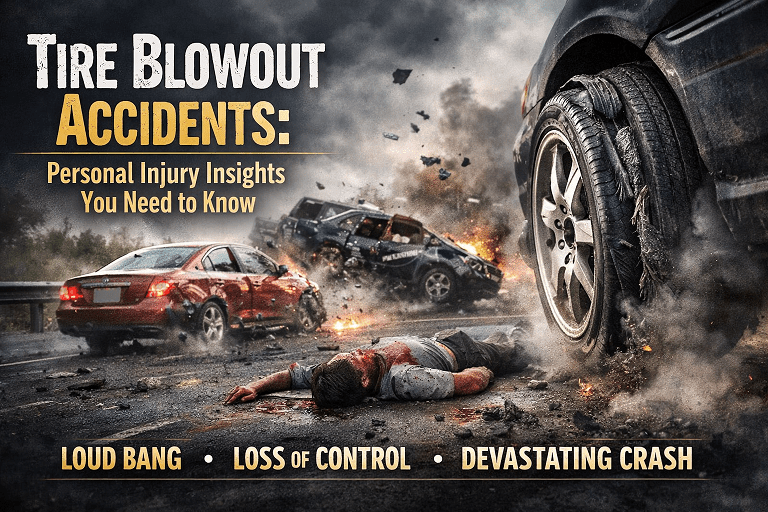
A tire blowout happens in an instant — a loud bang, a sudden loss of vehicle control, and in many cases, a devastating crash. These accidents are far more common than most people realize, and the injuries they cause can be life-altering. If you or someone you love has been hurt in a tire blowout accident, understanding your legal rights and the factors that contribute to these crashes is the first step toward getting the compensation you deserve.
What Is a Tire Blowout?
A tire blowout occurs when a tire fails suddenly and rapidly loses air pressure. Unlike a slow leak — which gives drivers some time to react — a blowout is explosive and immediate. The vehicle can violently pull to one side, causing the driver to lose control in a fraction of a second. At highway speeds, this loss of control is especially dangerous and can result in rollovers, multi-vehicle collisions, and serious injury or death.
According to the National Highway Traffic Safety Administration (NHTSA), tire-related crashes are responsible for thousands of injuries and fatalities each year in the United States. The majority of these incidents involve preventable failures — meaning someone’s negligence is often at the root of the tragedy.
Common Causes of Tire Blowout Accidents
Not all blowouts are the result of unavoidable circumstances. In many personal injury cases, the evidence points to a clear cause — and a responsible party. Some of the most frequently identified causes include:
Defective Tires: Manufacturing defects can compromise a tire’s structural integrity before it ever hits the road. Defects in the inner liner, belt separation issues, and tread separation are among the most dangerous and commonly litigated defects in product liability cases involving tires.
Underinflation: A tire that is significantly underinflated generates excessive heat through friction as it flexes. Over time — and sometimes very quickly at high speeds — this heat buildup causes the tire’s internal structure to break down, leading to a sudden blowout.
Overloading: Every vehicle has a load capacity, and every tire has a rating. When a vehicle is overloaded — whether a commercial truck or a personal vehicle piled with cargo — the added stress on the tires dramatically increases the risk of blowout.
Road Hazards: Potholes, debris, and uneven road surfaces can damage tires in ways that aren’t immediately visible but weaken them enough to cause failure later. In some cases, poor road maintenance by a government entity may be a contributing factor to the accident.
Worn or Aged Tires: Tires degrade over time, even when they look acceptable on the surface. Rubber compounds break down, sidewalls weaken, and the risk of sudden failure increases significantly after a tire reaches a certain age or tread depth. Drivers who continue using worn tires — or mechanics and shops who fail to flag dangerous tires during inspections — may bear responsibility for a resulting blowout.
Improper Installation or Repair: A tire that has been incorrectly mounted, improperly balanced, or repaired using substandard methods is a hazard waiting to happen. Tire shops and automotive service providers owe customers a duty of care, and a failure to meet that standard can result in liability.
Who Can Be Held Liable in a Tire Blowout Accident?
One of the most important aspects of any personal injury claim following a tire blowout is identifying who is legally responsible for the harm caused. Depending on the circumstances, liability may fall on one or more parties.
The Driver: If the driver of the vehicle that suffered the blowout was negligent — such as failing to maintain properly inflated tires, ignoring obvious signs of tire wear, or driving with tires they knew were in poor condition — they may be liable for injuries sustained by passengers or other motorists.
Tire Manufacturers: When a defective product causes an accident, product liability law allows injured parties to hold the manufacturer accountable. If a tire blows out due to a manufacturing or design defect, the tire company may be liable regardless of how the tire was used. These cases often involve detailed expert analysis of the tire’s failure mode.
Vehicle Manufacturers: In some cases, a flaw in the vehicle’s design — such as a rim design that is incompatible with the stress placed on tires — can contribute to a blowout. Vehicle manufacturers can be named in product liability claims when their design choices play a role in tire failure.
Fleet Owners and Commercial Trucking Companies: Commercial trucks are particularly prone to tire blowouts, and the results are often catastrophic when they occur on highways. Trucking companies are required under federal regulations to maintain their vehicles, including tires, in safe operating condition. When a trucking company’s negligence in maintenance leads to a blowout, they can be held responsible for any injuries caused.
Government Entities: If a road defect — like an unrepaired pothole or debris left from a construction zone — caused or contributed to the tire failure, a government agency responsible for road maintenance may bear some liability. Claims against government entities typically involve shorter filing deadlines and specific procedural requirements, making it critical to consult an attorney quickly.
Automotive Repair Shops: If a tire shop or mechanic negligently installed, repaired, or failed to recommend replacement of a dangerous tire, they may share responsibility for the resulting accident.
Types of Injuries Common in Tire Blowout Accidents
The injuries sustained in tire blowout accidents run the full spectrum of severity. Because these crashes often involve high speeds, sudden impacts, and rollovers, the physical consequences can be profound.
Traumatic brain injuries are among the most serious outcomes, particularly in rollover accidents where occupants’ heads may strike the interior of the vehicle or the ground if ejected. Spinal cord injuries, including partial or complete paralysis, are also tragically common in these crashes. Broken bones, lacerations, internal bleeding, and soft tissue injuries are frequently documented in accident reports following tire blowouts.
Burn injuries can occur when a blowout triggers a fire or when occupants come into contact with the hot rubber and mechanical components of a failed tire. For motorcyclists, a nearby vehicle’s blowout can send debris flying or cause a sudden traffic disruption that results in catastrophic accidents. Psychological trauma — including post-traumatic stress disorder — is a legitimate and compensable harm that many blowout accident survivors experience long after their physical wounds have healed.
Preserving Evidence After a Tire Blowout Accident
In the chaotic aftermath of a crash, evidence preservation might be the last thing on a victim’s mind. But the steps taken in the hours and days following an accident can make or break a personal injury claim.
The tire itself is arguably the most critical piece of evidence. If the tire remains on the scene, it should be photographed extensively before being removed, and efforts should be made to preserve the physical tire for later expert analysis. Do not allow anyone to discard or repair the tire. Photographs of the vehicle, the crash scene, road conditions, and visible injuries are invaluable. Witness contact information, police reports, and any available dashcam footage should be collected as promptly as possible.
Seek medical attention immediately — even if you feel fine in the immediate aftermath. Adrenaline can mask the symptoms of serious injuries, and a documented medical evaluation is essential both for your health and for your legal claim.
What Compensation Can Victims Recover?
Victims of tire blowout accidents caused by another party’s negligence or a defective product may be entitled to significant financial compensation. Recoverable damages typically include medical expenses — both past and future — lost wages and reduced earning capacity, pain and suffering, emotional distress, and compensation for permanent disability or disfigurement. In cases involving egregious conduct, such as a trucking company knowingly allowing vehicles with dangerously worn tires to remain in service, punitive damages may also be available.
Every case is different, and the value of a personal injury claim depends on many factors, including the severity of the injuries, the strength of the evidence, and the applicable insurance coverage. Working with an experienced personal injury attorney gives victims the best chance of recovering full and fair compensation.
Why Timing Matters: Statutes of Limitations
Personal injury claims are subject to statutes of limitations — legal deadlines that, if missed, can permanently bar you from recovering compensation. Most states have a two- to four-year window from the date of the accident to file a lawsuit, though this varies and certain circumstances — such as claims against government entities or cases involving minors — may alter the timeline. The sooner you consult a personal injury attorney, the better positioned you will be to build a strong case before evidence degrades or disappears.
Speak With a Personal Injury Attorney About Your Tire Blowout Claim
Tire blowout accidents are legally complex, often involving multiple responsible parties, product liability claims, and extensive investigation. Victims deserve an advocate who understands both the science behind tire failure and the legal strategies required to hold negligent parties accountable. If you have been injured in a tire blowout accident, do not wait to seek legal guidance. A qualified personal injury attorney can evaluate your case, identify all liable parties, and fight to secure the compensation you need to move forward with your life.